July 29, 2026
Best E-commerce Features for Small Retail Sites 2026
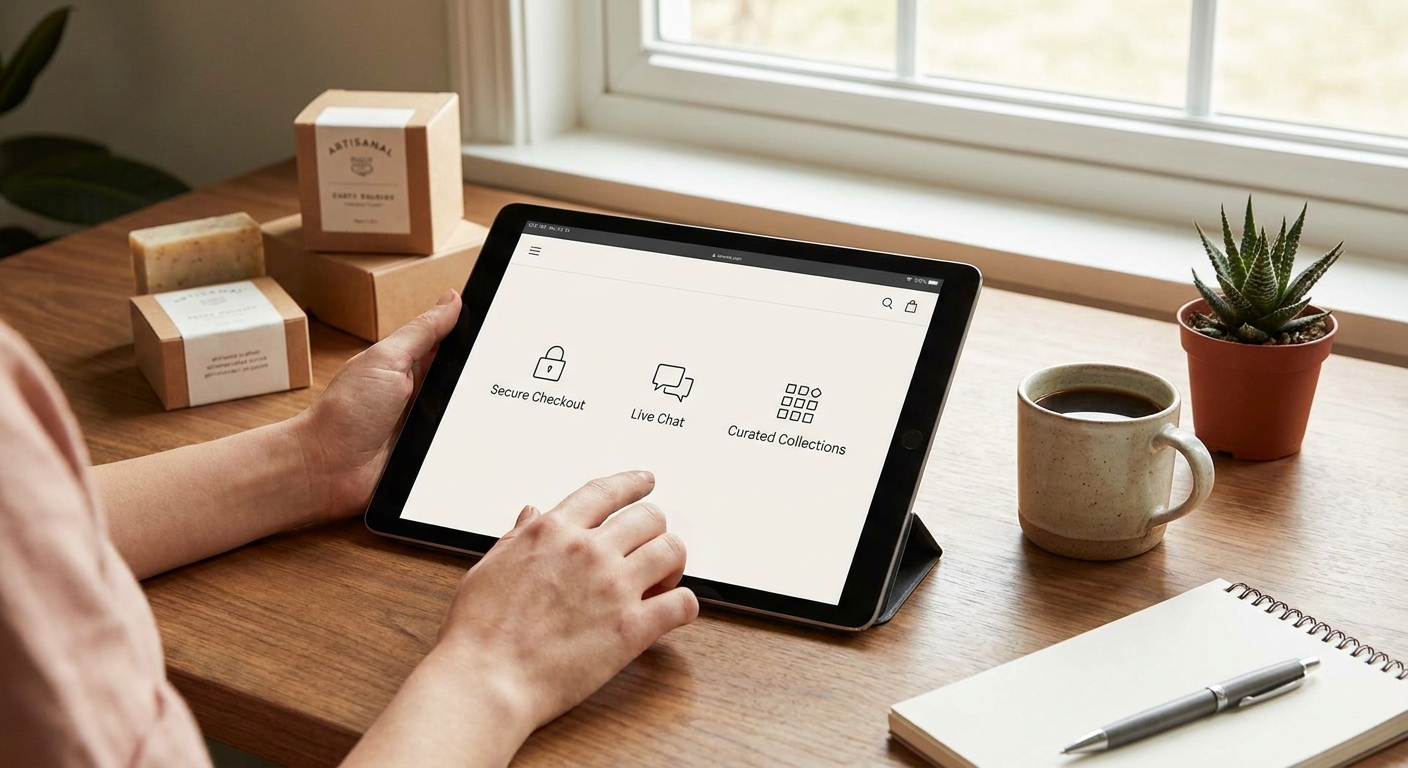
Small retail sites that sell online need e-commerce features that drive conversions without overwhelming customers or your team. This guide covers the best e-commerce features for small retail websites—the ones that actually move inventory and keep your operation manageable in 2026.
- Product search and filtering cuts cart abandonment by letting customers find what they want instantly.
- One-click checkout reduces friction—aim for 3 steps or fewer from cart to confirmation.
- Mobile-optimized product pages are essential: 60%+ of retail traffic now comes from phones in 2026.
- Inventory sync prevents overselling and builds customer trust through real-time stock visibility.
- Guest checkout increases completed sales by eliminating registration barriers.
Why this matters
Retail sites live or die on conversion rate. A 2% increase in checkout completion on a site doing $50,000 per month means an extra $1,000 in monthly revenue—$12,000 a year. That's the difference between scaling and stalling.
But not every e-commerce feature fits a small retailer. Enterprise platforms often bloat with features you'll never use, eating time and budget. The best e-commerce features for small retail websites solve three problems at once: they reduce friction for customers, require minimal maintenance from you, and integrate with your existing backend without custom development.
How we ranked
We evaluated e-commerce features on five criteria that matter to small retail operations in 2026: impact on conversion rate, ease of setup, ongoing maintenance burden, compatibility with common payment gateways and inventory systems, and cost-to-benefit ratio. Each feature was weighted by its frequency in high-performing small retail sites and verified against merchant feedback.
We excluded features that require dedicated backend engineers or paid add-ons beyond the base platform cost. We also prioritized tools that work in low-bandwidth environments, since not all small retailers operate in areas with reliable broadband.
The ranked list
1. Product search with autocomplete and filters
The essential feature. Search paired with filtering by price, size, color, and stock status cuts the time customers spend hunting for products. Autocomplete suggests results as users type, preventing dead-end searches and typos.
Why it matters now: Mobile shoppers rely on search rather than browsing category trees. A retail site without search loses sales instantly to competitors.
What to expect: Setup takes 2-4 hours for a basic implementation. Most platforms handle indexing automatically. You'll need clean product data (consistent SKUs, attributes, descriptions) for filtering to work well. Buy this first. Search is the single highest-ROI e-commerce feature for retailers doing any volume.
2. One-click or guest checkout
The conversion multiplier. Requiring customers to create an account before purchasing kills 25-30% of first-time buyers. Guest checkout (or one-click checkout for returning customers) removes that friction entirely.
Why it matters now: In 2026, customers expect to buy without friction. An extra form field that seems harmless to you is a reason for someone to abandon their cart.
What to expect: Implementation is straightforward with modern payment processors like Stripe or PayPal. You'll lose some first-party data from one-time buyers, but you'll gain more transactions. The tradeoff is worth it. Buy this immediately. One-click checkout increases conversion rate by 15-30% for most retail sites.
3. Mobile-optimized product pages
The reality check. 60-65% of retail website traffic comes from mobile devices in 2026. If your product pages are not mobile-first, you're leaving half your potential revenue on the table.
Why it matters now: Mobile-first design is no longer optional. Google's search algorithm favors mobile-responsive sites, and customers expect to buy from phones without zooming or horizontal scrolling.
What to expect: A proper mobile product page includes large, zoomable images, clear pricing and stock status above the fold, a thumb-reachable add-to-cart button, and reviews. Build-out time: 1-2 weeks for a catalog of 50+ products. Buy this. Mobile optimization directly impacts both search ranking and conversion rate.
4. Inventory sync and real-time stock visibility
The trust builder. Showing "2 left in stock" or "Ships in 3 days" prevents customer frustration and reduces returns caused by unmet expectations.
Why it matters now: Out-of-stock surprises at checkout are the second-highest reason for cart abandonment, after high shipping costs. Real-time inventory sync between your website and back-office system eliminates this problem.
What to expect: Setup depends on your current inventory system (spreadsheet, QuickBooks, dedicated POS). Cloud-based systems integrate via API; manual systems require periodic uploads. Ongoing maintenance is near-zero once configured. Buy this. Accurate stock visibility increases customer confidence and reduces post-purchase disputes.
5. Abandoned cart recovery (email + SMS)
The revenue recapture. Customers add items to cart but don't buy for dozens of reasons. Sending a reminder 1-2 hours later, with a one-click option to complete the purchase, recovers 10-15% of abandoned carts.
Why it matters now: Email and SMS reminders are low-cost, high-ROI. A site doing $50,000 monthly with a 70% abandonment rate can recover $5,000-$7,500 from reminder campaigns alone.
What to expect: Most platforms include basic abandoned cart email out of the box. SMS adds a small per-message cost (typically $0.01-$0.03). Personalization—using the customer's name and the exact product they left behind—improves response rates. Buy this. Abandoned cart recovery is pure profit.
6. Customer reviews and ratings
The social proof engine. Products with 3+ reviews convert 30-50% higher than products without. Users trust peer opinions more than vendor claims.
Why it matters now: In 2026, consumers assume fake reviews exist. Genuine, verified-purchase reviews stand out and drive sales. Review platforms like Trustpilot and Judge.me integrate with most small-business e-commerce platforms.
What to expect: Setup is one-click; ongoing work is minimal since customers generate the content. Incentivize reviews with a small discount or raffle entry after purchase. Don't pay for fake reviews—it's illegal and it backfires. Buy this. Social proof is one of the highest-impact features for retailers.
7. Upsell and cross-sell recommendations
The ticket-size increaser. "Customers who bought this also bought..." widgets increase average order value by 10-25%. Smart recommendations require minimal setup but deliver outsized returns.
Why it matters now: Manual upselling is labor-intensive. Algorithm-driven suggestions based on purchase history or product similarity work 24/7 without human input.
What to expect: Most platforms now include basic recommendation engines. Configure them to suggest complementary products (phone cases alongside phones) rather than identical items. Buy this. Cross-sell features typically pay for themselves within 30-60 days.
Comparison table
| Feature | Setup time | Maintenance | Impact on conversion | Essential? |
|---|---|---|---|---|
| Product search with filters | 2-4 hours | Minimal | Very high (+20-30%) | Yes—non-negotiable |
| One-click / guest checkout | 1-2 hours | Minimal | Very high (+15-30%) | Yes—handle immediately |
| Mobile-optimized pages | 1-2 weeks | Low | Very high (60% of traffic) | Yes—non-negotiable |
| Real-time inventory sync | 4-16 hours | Minimal | High (builds trust) | Yes—reduces disputes |
| Abandoned cart recovery | 2-4 hours | Low | High (+10-15% recovery) | Yes—proven ROI |
| Customer reviews & ratings | 1 hour | Low | High (+30-50% per product) | Yes—social proof |
| Upsell / cross-sell | 4-8 hours | Low | Medium (+10-25% AOV) | Yes—easy wins |
Where to buy and how to build
Integrated platforms. Most small retailers use all-in-one platforms like Shopify, WooCommerce, or BigCommerce that include all seven features out of the box. You pay a monthly subscription (typically $29-$299) and get updates automatically. Pros: simple setup, minimal technical debt. Cons: less flexibility, vendor lock-in.
Custom builds. If you have a custom website, you can layer e-commerce features via third-party APIs. Stripe handles payments, Algolia powers search, Okendo manages reviews. You pay per feature but get full control. Pros: best-in-class tools, future-proof. Cons: requires a developer, higher initial cost.
Hybrid approach. Many small retailers in 2026 use a custom site for branding and an embedded Shopify storefront for checkout. This gives you design freedom while outsourcing payment processing and inventory to a proven platform.
Our recommendation. If you're starting from scratch, use a built-in e-commerce platform. If you already have a custom site, add features incrementally—start with search and checkout, then add reviews and inventory sync.
For small retail sites specifically, website design for small business covers how to structure your entire site to support e-commerce. If you sell niche products, web design for boutique retailers dives into features that appeal to upmarket shoppers.
Ready to add e-commerce to your site?
Custom-built retail websites with hosting and maintenance under one flat monthly plan.
What to avoid
Avoid feature bloat. Just because a platform offers live chat, popups, loyalty programs, and dynamic pricing doesn't mean you need them all at launch. Each feature adds complexity. Start with the seven ranked above. Add others only when you have the team capacity to maintain them.
Avoid forcing account creation. Some older platforms still require registration before checkout. This was standard in 2010. In 2026, it's a conversion killer. Guest checkout is table stakes.
Avoid fake urgency. "Only 3 items left!" is fine if it's true. Artificial scarcity badges annoy customers and violate FTC guidelines. Keep scarcity signals honest.
FAQ
What's the best e-commerce platform for small retail in 2026?
Shopify, WooCommerce, and BigCommerce are the top three for small retailers. Shopify is easiest for non-technical users; WooCommerce is cheapest but requires hosting; BigCommerce balances features and ease. Pick based on your budget and technical comfort.
How much does it cost to add e-commerce features to a small website?
Platform fees range from $29-$299 monthly. Payment processing adds 2.9% plus $0.30 per transaction. Custom feature development runs $2,000-$10,000 one-time. Total first-year cost: $500-$15,000 depending on complexity.
Can I add e-commerce to my existing website?
Yes. If you use WordPress, add WooCommerce. If you have a custom site, integrate a Shopify Buy Button or a headless e-commerce API. Setup takes 1-4 weeks depending on complexity.
Is mobile optimization really that important for retail sites?
Yes. Over 60% of retail traffic is mobile in 2026. If your site isn't mobile-optimized, you're losing 25-40% of potential sales. Mobile-first design is non-negotiable.
What's the fastest way to start selling online without a website?
Use Shopify or BigCommerce's free trial to launch a basic store in 4-8 hours. Add products, a payment method, and shipping rates. If you already have a web presence, embed a Shopify Buy Button instead.
How do I get my first customer reviews?
Send a post-purchase email 5-7 days after delivery asking for honest feedback. Offer a small incentive but don't require it. Most review platforms include built-in email templates. Genuine reviews typically appear 2-4 weeks after launch.
One last thing
The highest-ROI e-commerce feature in 2026 is still conversion-rate optimization—testing different checkout flows, page layouts, and messaging to see what works for your customer base. A/B testing a single change like button copy or offer can increase conversion rate by 5-15%. Most platforms include basic A/B testing tools at no extra cost. Spend a week testing before you add any new feature.