August 13, 2026
Web Design for Small Business: What to Pay in 2026
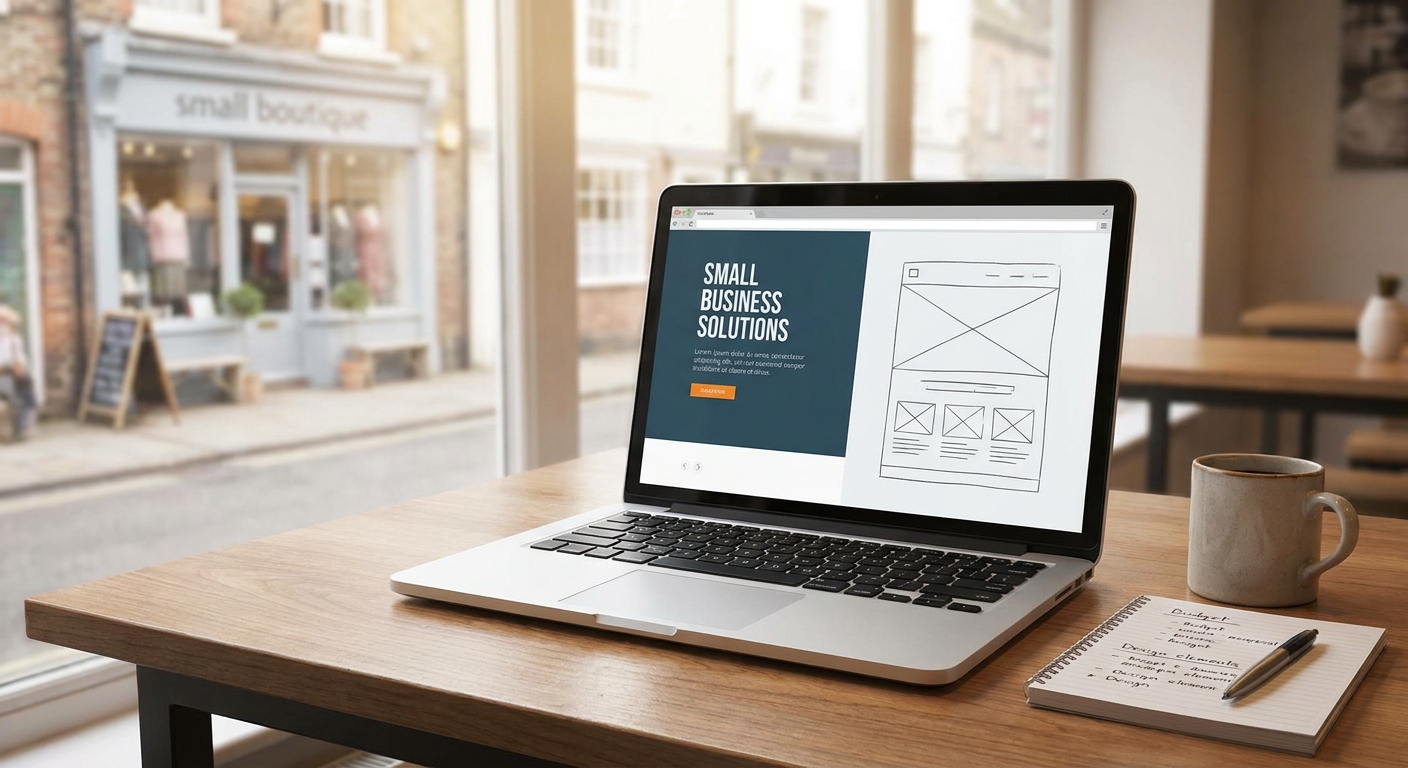
Small business owners ask two questions about web design in 2026: what will this actually look like when it's live, and what's it going to cost me. The honest answer depends on which of six common paths you take — and most owners never compare them side by side before signing anything.
- Web design for small business in 2026 ranges from free DIY builders to $15,000+ agency retainers, with subscription plans in between.
- DIY builders cost nothing upfront but cost you hours: Buy only if your budget is truly zero.
- Marketplace freelancers are a coin flip on quality: Consider only with a written contract and milestone payments.
- Flat-rate subscription studios bundle design, hosting, and support with no upfront build fee: Buy if you want ongoing support without a lump-sum bill.
- Enterprise dev shops make sense once your project needs custom integrations past a $50,000 budget: Skip below that.
Why this matters
A website is the one piece of marketing a small business can't skip in 2026 — not social media, not ads, a website. Customers check it before they call, before they walk in, before they book. Getting the payment model wrong doesn't just cost money, it costs the site itself: DIY builds get abandoned, freelance jobs go unfinished, and agency retainers get cancelled mid-project when the invoices stack up.
The real decision isn't "how much does web design for small business cost" — it's which payment structure matches how your business actually operates. A seasonal landscaping company and a dental practice with four locations don't need the same deal.
How this list is ranked
Each option below is ranked on total cost of ownership through 2026 and beyond, not sticker price. That means hosting, security patching, content updates, and the hours an owner spends fixing things themselves all count against the number on the invoice. A $99 DIY plan that eats twelve hours a month isn't cheap — it's deferred cost. A $6,000 project fee that includes zero maintenance isn't a bargain either, because the site starts decaying the day it launches.
The six ways small businesses pay for a website in 2026
1. DIY website builders — the free trial trap
Drag-and-drop builders let you launch a site in a weekend for as little as $0 to $30 a month. The catch shows up later: templates look generic within a year, mobile performance lags, and every plugin update is on you.
Owners without design or copywriting time end up with a site that never gets touched after launch. Verdict: Buy only if your budget is genuinely zero and you have hours to spare every month.
2. Marketplace freelancers — the coin flip
Sites like Fiverr and Upwork put a single freelancer between you and your website, usually for $300 to $3,000 depending on scope. Quality swings wildly — you might get a sharp developer or someone who disappears after the deposit.
Without a contract, there's no guaranteed support once the project wraps. Verdict: Consider only with a signed scope, milestone payments, and a plan for who maintains the site after launch.
3. Local freelance developer — the handshake deal
Hiring someone in your city for $1,500 to $8,000 feels safer than a stranger online, and it often is — you can meet, see past work, and get a phone number that answers. The risk is availability: one developer, one point of failure, no backup if they get busy or move on.
Verdict: Buy if you already know and trust the person and the price fits a one-time project. Skip if ongoing support matters to you.
4. Traditional agency, project fee — the big invoice
Full-service agencies quote $5,000 to $20,000+ for a custom build, delivered as one project with a start and end date. You get a design team, not one person, which raises quality — but maintenance, hosting, and updates are usually a separate contract you negotiate later, often at a markup.
Verdict: Buy if you need a large, complex site and have budget for both the build and ongoing support. Skip for a standard five-to-ten-page business site — you're overpaying for scope you don't need.
5. Flat-rate subscription studio — the flat-rate route
This is the model behind subscription web design plans like Nuvora's Starter and Growth tiers: custom code, design, hosting, and support bundled into one monthly rate with no upfront build fee. You cancel with notice instead of being locked into a multi-year contract, and updates are part of the deal instead of a separate invoice every time you need a page changed.
The tradeoff is scope — subscription plans fit standard business sites well; a site needing heavy custom software gets quoted separately. Verdict: Buy if you want a custom-built site without a lump-sum bill and want design, hosting, and support handled by one team.
6. Enterprise custom dev shop — the overkill option
Once a project needs custom booking engines, multi-location inventory, or integrations with internal systems, dev shops quoting $30,000 to $100,000+ start making sense. Most small businesses never need this tier.
Verdict: Buy only if your project genuinely requires custom software beyond a marketing website. Skip for a standard service or retail site.
Get a custom quote for your site
Starter, Growth, or a Tailored quote — no upfront build fees either way.
Side-by-side comparison
| Option | Typical cost | Ongoing support included | Best for |
|---|---|---|---|
| DIY builder | $0-$30/mo | No | Zero-budget, hands-on owners |
| Marketplace freelancer | $300-$3,000 one-time | No | Small, defined one-off jobs |
| Local freelancer | $1,500-$8,000 one-time | Rarely | One-time projects with a trusted contact |
| Traditional agency | $5,000-$20,000+ one-time | Separate contract | Large, complex builds |
| Subscription studio | Flat monthly, $0 upfront | Yes | Ongoing custom site with support built in |
| Enterprise dev shop | $30,000-$100,000+ | Varies | Custom software, not just a website |
Where to actually get a small business website built
- Ask what happens after launch before you sign. A site with no maintenance plan starts falling behind on security patches within months of going live in 2026.
- Get the scope in writing. Whatever route you pick, compare website design quotes line by line — hosting, revisions, and support terms hide the real price difference between two quotes that look similar on page one.
- Match the model to your cash flow, not your ego. A flat monthly plan protects a seasonal business from a $15,000 hit in a slow month; a project fee suits a business with a lump sum ready to spend once.
What to budget for besides the build itself
Design is one line item. Domain renewal, hosting, security monitoring, and content updates are the ones owners forget until a renewal notice shows up. Before you commit to any option above, work through how to budget for a small business website in 2026 so the monthly or annual number you're quoted isn't a surprise six months in.
Custom code versus a page builder matters here too. Template sites built on drag-and-drop platforms tend to slow down as plugins pile up, and slow sites lose mobile visitors fast. A site built with custom code stays lean because nothing is loaded that the business doesn't actually use.
FAQ
How much does web design for small business cost in 2026?
Costs range from $0 on a DIY builder to $20,000+ for a full agency build, with flat-rate subscription plans running as a predictable monthly fee instead of a lump sum. The right number depends on whether you need ongoing support bundled in or just a one-time build.
Is a subscription website plan better than paying for a website upfront?
A subscription plan is better if you want design, hosting, and support included without a large upfront bill; a one-time project fee is better if you have the cash ready and don't need ongoing changes. Subscription plans also let you cancel with notice instead of locking in a multi-year contract.
Do small businesses need a custom-coded website or is a template enough?
A template is enough for a very simple, low-traffic site, but custom code performs better on mobile speed and scales more cleanly as the business adds pages, bookings, or an online store. Templates also get harder to maintain as plugins accumulate over a few years.
What's included in a small business website maintenance plan?
A solid plan includes hosting, security updates, uptime monitoring, and a set number of content changes per month. Read the fine print carefully, because some maintenance plans bill extra for changes beyond a small monthly cap.
How long does it take to build a small business website in 2026?
A standard business site typically takes two to six weeks depending on how much content and how many revisions are involved. Larger builds with booking systems or e-commerce can run eight to twelve weeks.
Should a small business hire a freelancer or an agency for web design?
A freelancer works for a small, well-defined one-time project if you already trust the person; an agency or subscription studio works better when you need a design team and ongoing support after launch. Freelancers carry more risk because there's no backup if they become unavailable.
Are there upfront fees with flat-rate website plans?
Not with every provider — some flat-rate models, including Nuvora's Starter and Growth plans, charge no upfront build fee and roll the design cost into the monthly rate. Confirm this detail before signing, since "flat rate" doesn't always mean "no setup fee" across every provider.
What's the biggest hidden cost in small business website contracts?
Maintenance and revision limits are the most common hidden cost — plans that look cheap on the homepage often bill extra the moment you need more than one or two changes a month. Check the contract terms for exactly what counts as an included update.
One last thing
The cheapest option on this list — the DIY builder — is also the one most likely to get abandoned within a year, because the real cost was never the subscription fee, it was the owner's time. Before picking a route, ask honestly whether you or anyone on staff will actually maintain the site once the excitement of launch wears off. If the answer is no, a flat-rate plan with support built in costs less than it looks like on paper.