July 27, 2026
Website Design for Bakeries: 2026 Buying Guide
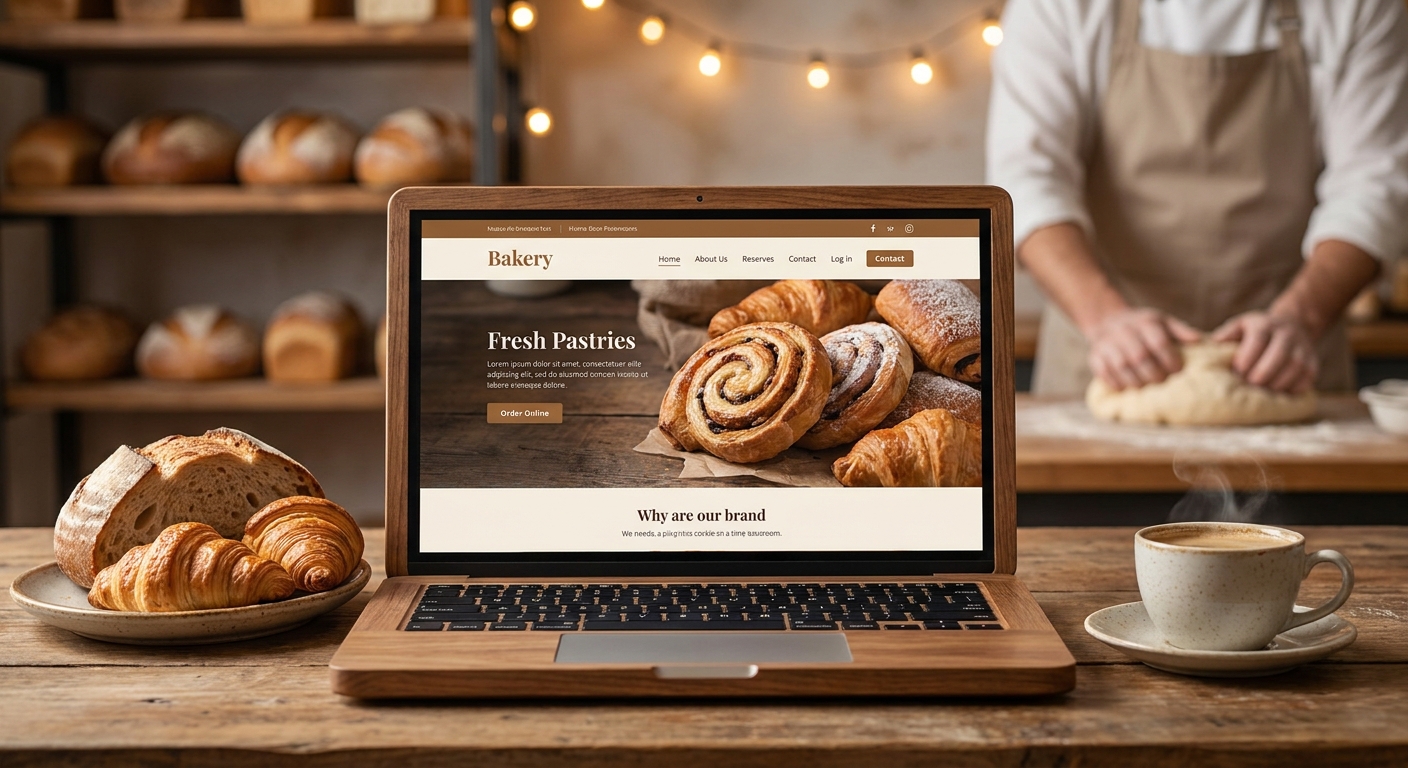
A bakery website has one job: make someone hungry enough to order before they finish scrolling. Most bakery sites fail that test because they're built like brochures instead of storefronts.
- A subscription-based custom build is the safest pick for website design for bakeries in 2026 — buy it.
- Skip DIY builders once you're taking pre-orders; checkout friction costs more than the monthly fee saves.
- A local freelancer build is fine for a launch but risky long-term with zero maintenance backup.
- Bakery sites need 5 to 8 pages, not 20 — menu, ordering, hours, and story cover it.
Why this matters
Bakeries live and die on impulse and proximity. Someone searches "bakery near me" or clicks an Instagram bio link at 9pm craving croissants, and if the site doesn't load fast or show today's case in the first screen, they close the tab and order somewhere else. A slow, outdated, or template-heavy site doesn't just look bad — it actively loses the exact customer who was already sold.
The same pressure shows up in restaurant website design: food businesses convert on hunger and immediacy, and a bakery site has to move faster than a five-course menu page ever needs to.
Who this is for
This guide is for bakery owners and managers — single-location shops, small wholesale-plus-retail operations, and multi-case bakeries with a walk-in counter — who need a website that handles pre-orders, custom cake inquiries, daily specials, and local search, without a developer on call. If you're updating your menu by hand in a Squarespace block editor every Sunday night, this is written for you.
What to look for in website design for bakeries
Pre-order and custom cake request forms
A bakery site without a way to request a custom cake or reserve a holiday order is a missed sale every single time. The form needs to capture date, size, flavor, and budget upfront — not just an email address that gets lost in a shared inbox.
Mobile-first photo layout
Most bakery discovery happens on a phone, scrolling fast. Photos of the case, the cake, and the storefront need to load in the first two seconds on a phone connection, not after a hero video buffers.
Local search and Google Business Profile sync
"Bakery near me" and "custom cakes [city]" are the searches that matter most, and they depend on the website and the Google Business Profile pointing to the same hours, address, and phone number. A mismatch between the two quietly kills local rankings.
Easy self-updates for daily and seasonal items
A bakery's menu shifts weekly and its seasonal lineup shifts up to four times a year — pumpkin in fall, peppermint in winter, and so on. If updating a "today's specials" section requires calling a developer, it won't happen, and the site goes stale fast.
Hosting and maintenance bundled in
A bakery owner does not have time to renew a domain, patch a plugin, or troubleshoot a broken checkout at 6am before the ovens go on. Hosting, uptime, and security patching need to be someone else's job, included in what you're already paying.
Fast load speed on image-heavy pages
A bakery site is unavoidably photo-heavy — cases, cakes, storefront, packaging. Unoptimized images are the single most common reason a bakery site loads slowly, and slow pages lose mobile visitors before the menu even renders.
Get a bakery website built for you
Custom build, hosting, and updates under one flat monthly plan.
Top picks for website design for bakeries
1. DIY drag-and-drop builder — the free-trial trap. A generic builder platform gets a bakery online in a weekend with zero code. The catch: most bakery owners spend 2 to 4 hours a month fighting template limitations once they add online ordering. Fine for a pop-up stand testing the market. Consider for pre-launch, Skip once you're taking real pre-orders.
2. Template theme installed by a freelancer — the fast fix. A freelancer drops a stock theme, swaps in your logo and photos, and hands you the keys. It looks finished in under two weeks but breaks the moment you need a new form field or a plugin update. Consider only as a stopgap before a real build.
3. One-person freelance custom build — the disappearing act. A solo freelancer can build something genuinely custom, often cheaper upfront than an agency. The risk: no backup if they go quiet, and bakery owners report waiting weeks for a menu fix during exactly the season they needed it most. Skip for anything beyond a one-time project.
4. Flat-fee subscription custom build — the maintenance-included pick. A custom-built site with hosting, updates, and QA bundled into one monthly plan removes the upfront build cost and the ongoing maintenance headache in one move — the model detailed in website design for small business. A bakery gets a 5-to-8-page site with pre-order forms, photo galleries, and Google Business Profile sync, and someone else keeps it patched and fast. Buy — this is the pick for any bakery planning to operate past this year.
5. Full-service agency retainer — the overkill. A traditional agency retainer can deliver a polished site with strategy decks and quarterly reviews, but the monthly retainer is built for enterprise budgets, not a two-oven bakery with six SKUs. Skip unless you're running multiple locations with a marketing team already in place.
For a side-by-side of what subscription pricing actually includes across small businesses, best website subscription plans for small businesses breaks down what's bundled and what typically costs extra.
What to avoid
- Stock bread photography. Generic stock images of croissants and baguettes signal "template" instantly to anyone who's shopped for a bakery before. Real photos of your actual case convert better every time.
- A one-page site with no ordering path. A single scrolling page might look clean, but if there's no clear path to place a custom order or check today's hours, you're forcing the customer to call — and most won't.
- Any build with no update plan after launch. A bakery site frozen at launch-day pricing and menu items within 90 days looks abandoned, and Google notices stale pages too.
Verdict comparison
| Approach | Update speed | Maintenance included | Best for | Verdict |
|---|---|---|---|---|
| DIY builder | Slow, manual | No | Pre-launch testing | Consider |
| Freelancer + template | Slow after handoff | No | Quick stopgap | Consider |
| Solo freelance custom | Depends on availability | No | One-time project | Skip |
| Flat-fee subscription build | Fast, ongoing | Yes | Any operating bakery | Buy |
| Agency retainer | Fast | Yes | Multi-location bakeries | Skip (for small shops) |
“If updating a specials section requires calling a developer, it will not get updated.”
FAQ
How much does website design for bakeries cost in 2026?
Costs vary by build type, but a flat monthly subscription model avoids a large upfront build fee entirely and folds hosting and maintenance into one recurring rate. A one-time freelance or agency build typically requires a larger payment upfront with no ongoing support included.
Do bakeries need online ordering on their website?
Yes, once you're taking pre-orders or custom cake requests regularly. A dedicated form that captures date, flavor, size, and budget converts far better than routing everything through phone calls or a generic contact email.
How long does it take to build a bakery website?
A custom subscription build typically takes 2 to 4 weeks from kickoff to launch for a standard 5-to-8-page bakery site. A DIY builder can go live in a weekend, but takes longer to refine once real orders start coming in.
Is a DIY website builder good enough for a bakery?
A DIY builder works for a pre-launch or pop-up stage, but most bakery owners hit its limits within a few months once ordering, forms, and photo galleries need to scale together.
How often should a bakery update its website menu?
Update daily specials weekly and swap seasonal items up to four times a year around major holidays. A site that's easy to self-edit is the only way this actually happens on schedule.
Does a bakery website need to be mobile-friendly?
Yes — most bakery searches and Instagram-driven clicks happen on a phone, so photos and ordering forms need to load fast and display cleanly on a small screen first.
What's the difference between a bakery website and a restaurant website?
A bakery site leans more on visual merchandising and custom order forms, while a restaurant site leans more on reservations and full menus with dietary filters. Both share the same requirement for fast-loading, mobile-first design.
Should a bakery hire a freelancer or use a subscription service?
A freelancer can work for a one-time build, but a subscription service with maintenance included avoids the risk of a site going stale or breaking with no one available to fix it.
One last thing
The bakeries that keep customers coming back aren't the ones with the fanciest homepage animation — they're the ones whose "today's specials" section actually reflects what's in the case right now. That single detail, updated consistently, does more for repeat visits than any redesign.