July 30, 2026
Best Website Design Elements for Construction Cos (2026)
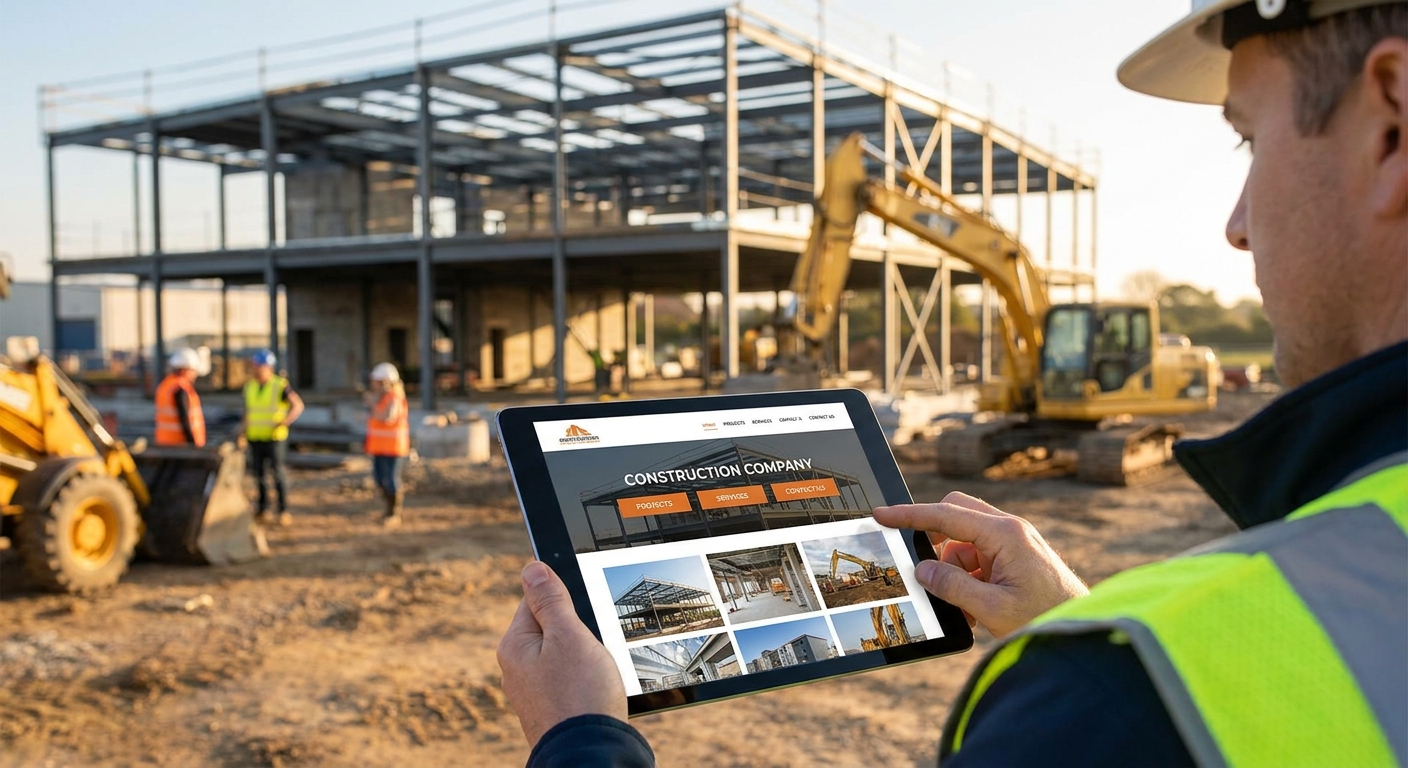
Construction company websites either make it dead simple for a homeowner or GC to request a bid in under a minute, or they lose that lead to the competitor with a faster form. This guide ranks the website design elements that actually move the needle for contractors, roofers, electricians, and general builders in 2026.
- Hero footage of real jobsites beats stock photos for construction company websites every time — Buy it.
- An instant estimate request form is the single highest-leverage element on any contractor site in 2026 — Buy it.
- Live chat widgets rank as Wait for most construction companies — the follow-up speed matters more than the channel.
- Sub-2.5-second mobile load time separates sites that convert from sites that bounce before the quote form loads.
Why this matters
A construction company's website gets maybe 8 to 15 seconds of attention before a visitor decides whether to call, fill out a form, or leave for the next search result. That's less time than a homeowner spends reading a single paragraph.
Most contractor sites still lead with a stock photo of a hard hat and a paragraph about "quality craftsmanship since 1998." None of that answers the only question the visitor actually has: can this company handle my project, and how fast can I get a number?
The elements ranked below come from what contractor websites and contractor website platforms are built around in 2026 — trust signals, speed, and a frictionless path to a quote. Skip the wrong ones and you're paying for a digital brochure nobody reads.
How this list was ranked
Each element is scored on three things: how directly it drives a quote request, how it holds up on a jobsite-browsing phone connection, and whether it's still worth the build time in 2026 or has been replaced by something better. Elements that only look good in a design mockup and don't convert get a Skip. Elements that are situational — useful for some construction niches, dead weight for others — get a Hold. Everything else is either a straight Buy or a Wait if the technology is still maturing.
This isn't a ranking of construction companies. It's a ranking of the pieces that make up their websites, ordered by return on the build effort.
The ranked list
1. Hero footage of real jobsites
The credibility maker. A 10 to 15 second video loop of an actual crew pouring a foundation or framing a roof outperforms a static stock photo because it answers "is this a real company" in the first three seconds. Construction is a trust-first purchase — homeowners are letting strangers onto their property for weeks.
Sites that swap stock imagery for real jobsite footage typically see longer time-on-page, because the visitor keeps scrolling instead of bouncing. Verdict: Buy.
2. Filterable project portfolio
The closer. A gallery visitors can filter by project type — kitchen remodels, roofing, additions, commercial builds — lets a homeowner self-select into the exact proof they need. A general "our work" page with 12 unsorted photos makes people scroll past the two that would have convinced them.
Roofing and remodeling companies benefit most here since project type varies wildly by job; compare how this plays out on roofing contractor websites versus a single-service electrician site. Verdict: Buy.
3. License, bonding, and insurance trust bar
The deal-breaker. A visible strip showing license number, bonding status, and insurance coverage near the top of the homepage removes the single biggest objection in construction: "can I trust this crew in my house." Leaving this buried on an About page costs leads you never see.
This element costs almost nothing to build and directly answers a legal question every homeowner should be asking in 2026. Verdict: Buy.
4. Instant estimate request form
The lead machine. A three-field form — name, phone, project type — outperforms a five-page contact form every time. Construction leads move fast; the company that responds first usually wins the job, and a form that takes 90 seconds to complete loses people who'd rather just call the next name on the search results page.
This is consistently the highest-leverage element across website features for local service businesses, not just construction. Verdict: Buy.
5. Service-area map with zip lookup
The local SEO play. Listing exact service zip codes or a clickable map tells both Google and the visitor whether this company covers their address before they waste time filling out a form. For companies working a 30-mile radius, this cuts down on wasted quote calls from out-of-area leads.
Single-city contractors get less value here than regional operators. Verdict: Hold.
6. Sub-2.5-second mobile load time
The silent killer. Google's Core Web Vitals benchmark asks for a Largest Contentful Paint under 2.5 seconds, and most construction sites blow past it with unoptimized jobsite photos. A visitor searching from a truck cab on spotty jobsite wifi won't wait for a 6-second load.
Every other element on this list is wasted if the page doesn't load fast enough for someone to see it. Verdict: Buy.
7. Video testimonials from clients
The trust multiplier. A 20-second video of a homeowner or general contractor talking through the finished project beats a wall of written star ratings, because tone and specifics are harder to fake on camera. Written reviews still matter, but video adds a layer stock testimonials can't fake.
This works best for companies with a handful of standout projects to showcase, not high-volume trade services. Verdict: Hold.
8. Stock-photo hero of a generic hard hat
The fake. This is still the default template on a huge share of contractor sites in 2026, and it's the fastest way to look interchangeable with every competitor. Visitors have seen the same three stock photos on five other company sites before they land on yours.
Replace it with real jobsite footage or drop it entirely. Verdict: Skip.
“If the homepage hero is a stock photo of a hard hat, the visitor has already seen it on your competitor's site.”
Comparison table
| Element | Priority | Best For | Verdict |
|---|---|---|---|
| Real jobsite hero footage | High | All construction companies | Buy |
| Filterable project portfolio | High | Remodelers, roofers | Buy |
| License/bonding trust bar | High | All construction companies | Buy |
| Instant estimate form | High | All construction companies | Buy |
| Service-area zip map | Medium | Regional operators | Hold |
| Sub-2.5s mobile load time | High | All construction companies | Buy |
| Video testimonials | Medium | Project-based builders | Hold |
| Stock hard-hat hero photo | Low | Nobody | Skip |
Where to get these built without overpaying
- Don't settle for a $99 drag-and-drop template. A missed lead on a $15,000 roofing job costs more than a year of a proper build.
- Confirm hosting and maintenance are included, not billed separately — project galleries and service pages change often enough that a static build goes stale fast.
- Ask who actually reviews the site before launch. Templates alone don't catch a broken estimate form or a slow-loading jobsite photo; that needs a human QA pass.
Get a construction website built right
Custom build, hosting, and maintenance on one flat monthly plan.
What to avoid
- Stock photography of hard hats and clipboards — it's the fastest way to look like every other contractor site.
- Five-field contact forms for a simple estimate request — every extra field drops completion rate.
- A portfolio with no filtering when the company handles more than two project types.
FAQ
What are the best website design elements for construction companies in 2026?
The best website design elements for construction companies in 2026 are real jobsite hero footage, a filterable project portfolio, a visible license and insurance trust bar, an instant estimate request form, and a sub-2.5-second mobile load time. These five directly drive quote requests instead of just looking polished.
Do construction company websites need a blog?
A blog helps with local search visibility but isn't a top-priority element compared to the estimate form and trust bar. It's worth adding once the core conversion elements are in place.
How fast should a contractor website load on mobile?
Under 2.5 seconds for Largest Contentful Paint, per Google's Core Web Vitals benchmark. Slower load times cost leads before the estimate form is even visible.
Is a live chat widget worth it for a construction company site?
Live chat ranks as a Wait for most construction companies in 2026 — follow-up speed on phone and form leads matters more than adding another channel to monitor.
Should construction websites show pricing?
Most don't publish fixed prices since project scope varies too much, but an instant estimate form gives visitors a fast path to a number without needing a published price list.
What's the biggest mistake on construction company websites?
Leading with a stock photo instead of real jobsite footage. It signals generic and interchangeable in the first three seconds, which is the opposite of what a trust-first purchase needs.
Do construction companies need separate pages per service?
Yes, when services vary significantly — roofing, remodeling, and additions each attract different search terms and different proof points, so separate pages perform better than one combined services page.
How much does a professional construction website cost in 2026?
Costs vary by builder and scope, with subscription-based models bundling design, hosting, and maintenance into one flat monthly rate instead of a large upfront build fee.
One last thing
The trust bar — license number, bonding, insurance — is the cheapest element on this list to build and the one most contractor sites still skip. It costs almost nothing to add and removes the single biggest objection a homeowner has before they'll even look at the portfolio.