July 27, 2026
Web Design for Roofing Contractors: 2026 Buying Guide
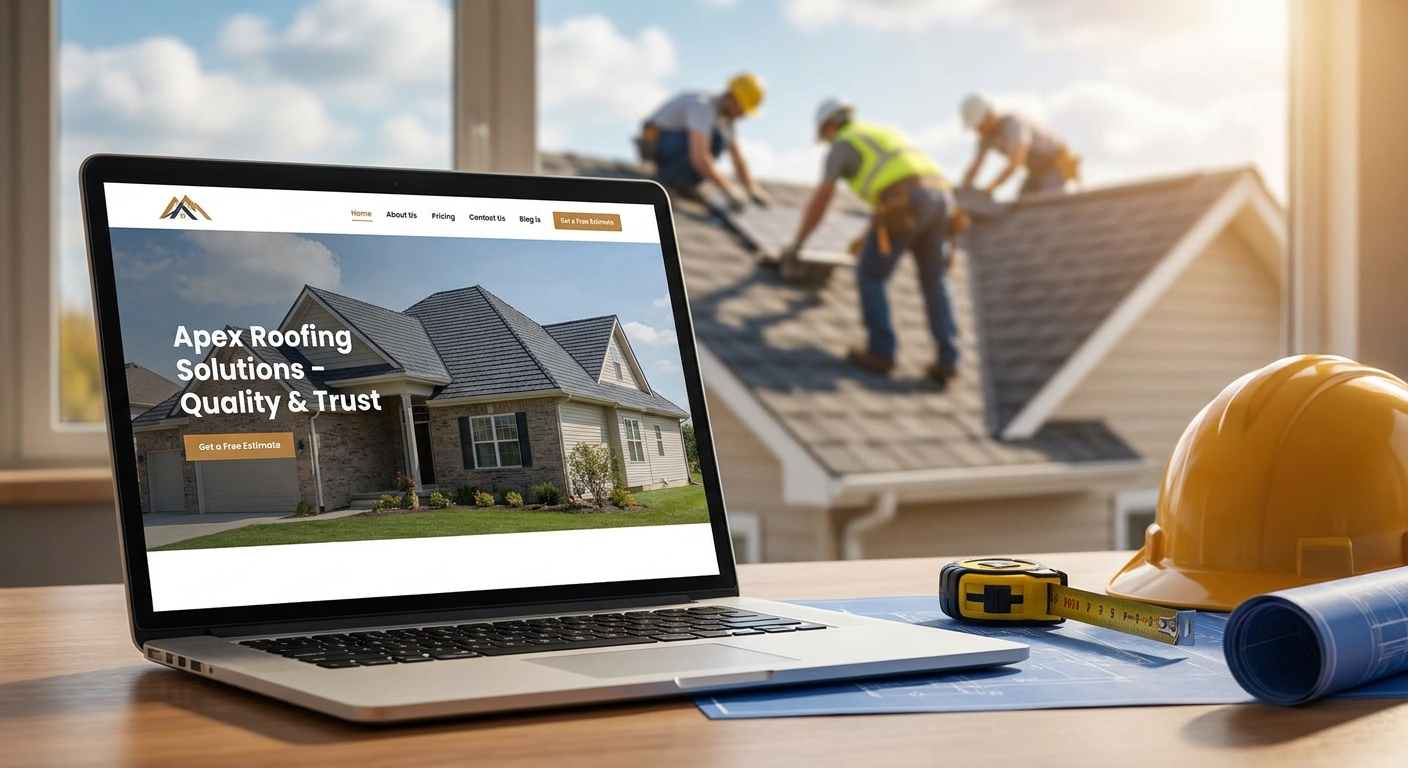
Roofing contractors lose bids before the phone ever rings, usually because a homeower gave up on a slow, cluttered site and called the next name on the list. This guide breaks down what web design for roofing contractors actually needs to work in 2026, who should build it, and which shortcuts cost you leads.
- Flat-monthly subscription builds beat DIY templates for roofing contractors who depend on storm-response leads — Buy.
- Wix and Squarespace templates suit a one-crew operation on a tight budget, but slow mobile load times cost bids — Consider.
- Freelance one-off builds without an ongoing maintenance plan go stale after the first algorithm shift — Skip.
- Web design for roofing contractors wins on load speed, mobile estimate forms, and real job photos, not stock imagery.
Why this matters
A roofing contractor's website is a bid tool, not a brochure. Homeowners comparing three quotes after a hailstorm will call whoever answers fastest and looks most credible online — and in 2026, "credible" means a site that loads fast on a cracked phone screen while someone stands in their driveway. If the site takes four seconds to load or buries the phone number in a hamburger menu, the roofer never gets the callback.
That's a design problem, not a luck problem. The contractors winning storm-season leads in 2026 aren't necessarily doing better work — they're just easier to hire. A flat-monthly subscription website removes the upfront cost barrier that keeps a lot of roofing crews stuck on outdated templates for years past their expiration date.
Who this is for
This guide is for owner-operators running one to fifteen crews, storm-response and re-roof specialists competing against national franchise brands, and any roofing business still running a site built in 2018 that nobody's touched since. If you're bidding jobs against companies with call centers and you're relying on a Facebook page as your website, start here.
What to look for in web design for roofing contractors
Mobile load speed under 2.5 seconds
Google's Core Web Vitals standard sets Largest Contentful Paint at 2.5 seconds for a "good" score, and roofing leads skew heavily mobile — homeowners search from their phone standing in the yard after a storm. A site that misses this threshold loses ranking and loses the click before the homeowner even sees your gallery.
Storm-response contact visibility
The phone number and a click-to-call button need to sit above the fold on every page, not buried three menu taps deep. Storm season isn't the time to make someone hunt for how to reach you — the roofer who answers first usually wins the job.
Before-and-after project galleries
Stock photography reads as generic to anyone who's shopped three roofing quotes already. Real job photos, sorted by roof type or material, do more to close a bid than a paragraph of copy about "quality craftsmanship."
Local service-area pages
A single "About Us" page won't rank for "roof repair [city name]" the way a dedicated page per service area will. Contractors covering 8 to 12 towns need 8 to 12 pages, each naming the town and the specific roofing service, not one generic page trying to cover all of them.
Instant estimate or quote forms
“If the estimate form takes more than two taps to reach, the roofer loses the lead to whoever answers the phone first.”
A form that asks for name, phone, and roof issue in under 60 seconds converts. A five-field form asking for square footage and insurance carrier before someone's even talked to a human does not.
Review integration
Embedded Google reviews, pulled live rather than pasted as screenshots, build trust faster than a testimonials page written by the contractor themselves. Homeowners check reviews before they call — make that step easy to do without leaving the site.
Top picks: how roofing contractors are actually building sites in 2026
1. Flat-monthly subscription custom build — the steady pick. One flat monthly fee covers design, hosting, and maintenance, with no upfront build cost and human QA on every update. For a roofing contractor juggling job sites and payroll, not touching the website again after launch is the point. Nuvora's model fits this exact profile: subscription pricing, plans built for small businesses rather than agencies charging five figures upfront. Verdict: Buy for any roofing business that wants the site handled and updated without hiring in-house.
2. DIY builder (Wix, Squarespace) — the budget pick. No monthly design fee beyond the platform cost, and a one-crew operation can get a basic page live in a weekend. The tradeoff shows up in load speed and template bloat — generic builder themes routinely miss the 2.5-second LCP threshold on mobile once photo galleries get added. Verdict: Consider, but only as a stopgap while budgeting for something better.
3. Freelance one-off build — the gamble. A single freelancer builds the site for a flat fee, then disappears. It works fine until a plugin breaks, a browser update shifts the layout, or Google changes a ranking signal — and there's nobody left to fix it. Roofing contractors report this as the most common site left untouched for three-plus years. Verdict: Skip unless the freelancer includes an ongoing maintenance retainer in writing.
4. Franchise or parent-brand template — the shortcut. Some roofing franchises hand local operators a locked template tied to the corporate brand. Fast to launch, but customization is limited and every local operator on the same template competes for the same generic keywords. Verdict: Consider only if the franchise agreement requires it — otherwise a standalone site wins more local search visibility.
5. Full-service marketing agency with SEO retainer — the overkill. Agencies bundling paid ads, SEO retainers, and web design charge accordingly, often north of what a one-to-three-crew roofing business can justify against its lead volume. It makes sense for a 20-plus crew regional operation running paid search at scale. Verdict: Skip for a small crew, Consider once you're running consistent ad spend that needs a dedicated team.
What to avoid
- Stock photos of roofs that aren't yours. Homeowners can tell, and it kills the trust a real gallery would build.
- Templates with no service-area pages. Looks finished, ranks for nothing beyond the business name.
- "Contact us" as the only conversion path. A contact page without a fast quote form loses leads to competitors with a two-tap form.
Get a roofing website built for leads
Flat monthly plan, no upfront build fee, human QA on every update.
Verdict comparison
| Approach | Load speed | Ongoing maintenance | Upfront cost | Verdict |
|---|---|---|---|---|
| Subscription custom build | Meets 2.5s target | Included | None | Buy |
| DIY builder | Often misses target | Self-managed | Low | Consider |
| Freelance one-off | Varies, degrades over time | None | Moderate | Skip |
| Franchise template | Meets target | Corporate-managed | Locked into franchise fee | Consider |
| Full agency retainer | Meets target | Included | High | Consider (scale only) |
FAQ
What should a roofing contractor's website include in 2026?
A roofing contractor's website needs a mobile load time under 2.5 seconds, a visible phone number on every page, real before-and-after job photos, service-area pages per town covered, and a quote form that takes under 60 seconds to submit. Skipping any of these costs storm-season leads to competitors who have them.
Is a subscription website better than a one-time build for roofers?
For most roofing contractors, yes — a subscription model covers ongoing maintenance and updates without a separate invoice every time something breaks. A one-time freelance build is cheaper upfront but usually goes stale within a year or two without a maintenance plan attached.
How much does web design for roofing contractors cost in 2026?
Costs vary by approach: DIY builders run low monthly platform fees, subscription studios charge a flat monthly rate with no upfront build cost, and full agency retainers run highest due to bundled SEO and ad management. Check current pricing directly with any provider before comparing.
Do roofing contractors need separate pages for each service area?
Yes — a single generic page won't rank for city-specific searches like "roof repair Springfield." A dedicated page per town or county covered gives each area its own chance to rank in local search results.
Should a roofing website use stock photos?
No. Stock photos of roofs and crews read as generic to homeowners comparing multiple quotes, and real before-and-after job photos convert better because they show actual work quality.
What's the biggest mistake roofing contractors make with their website?
The most common mistake is launching a site once and never updating it. A site left untouched for three or more years falls behind on mobile speed standards, broken plugins, and outdated service information — all of which cost search rankings and leads.
How fast should a roofing contractor's quote form load and submit?
A quote form should take under 60 seconds to fill out and require no more than three or four fields — name, phone, roof issue, and address. Longer forms asking for insurance details upfront see lower completion rates.
One last thing
Most roofing contractors don't lose bids because their work is worse — they lose bids because their site is slower than the competitor's. In 2026, that gap is measured in seconds of load time and taps to a quote form, not craftsmanship. Fix the site and the phone starts ringing for jobs you'd have lost anyway.