July 26, 2026
Web Design for HVAC Companies: 2026 Buying Guide
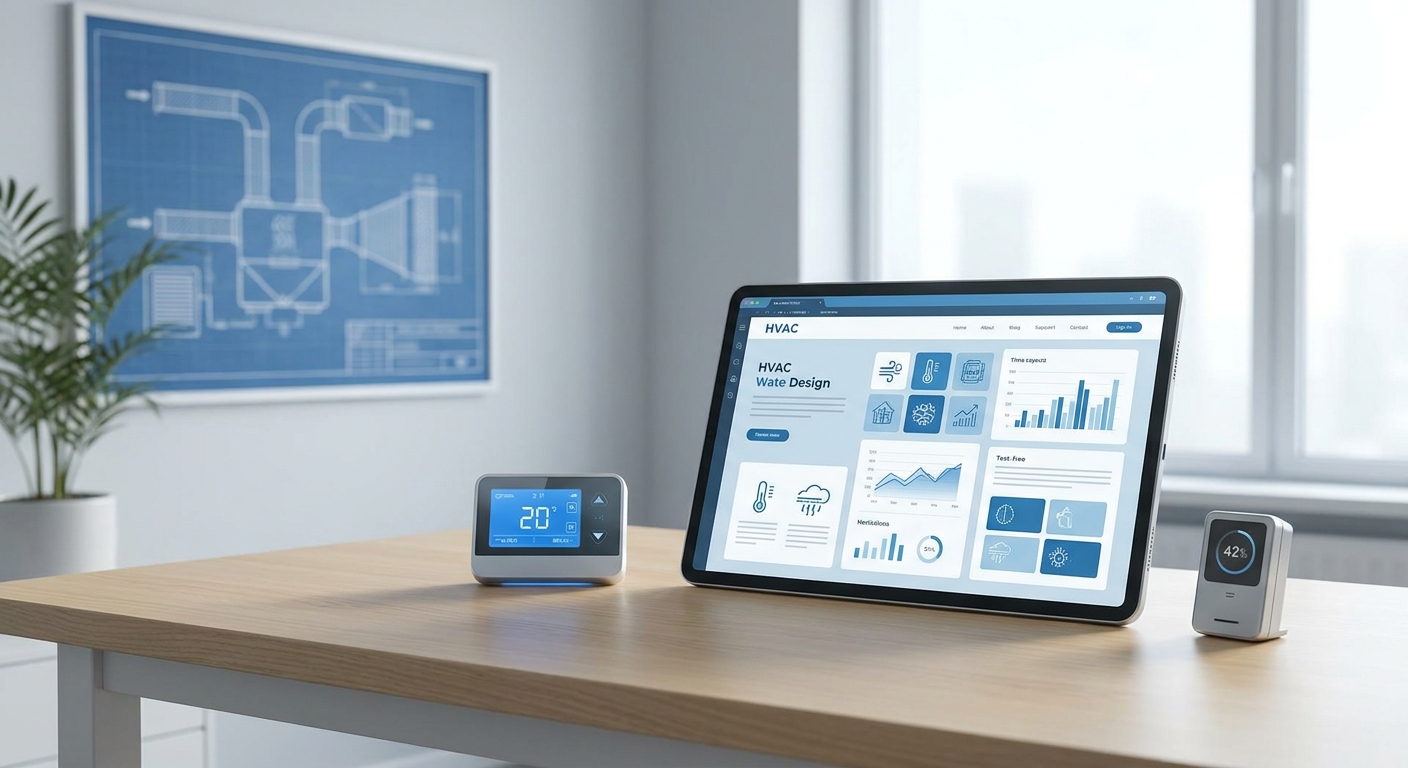
An HVAC company's website has one job in 2026: turn a panicked "no heat" search into a booked call before the visitor bounces to a competitor's number.
- Web design for HVAC companies must load fast and show a click-to-call button above the fold or it loses emergency searches.
- Flat-fee subscription builds like Nuvora's beat DIY templates for HVAC because they include local SEO structure and human QA — Buy.
- Wix and Squarespace templates work for a portfolio site but lack service-area page structure HVAC companies need in 2026 — Skip.
- Freelance one-off builds cost $2,000 to $8,000 upfront with no maintenance included — Consider only with a separate retainer budget.
- Full-service marketing agency retainers bundle ads with the site but often run $1,500 to $5,000 a month — Consider only if you need both.
Why this matters
HVAC leads are urgent and price-sensitive at the same time. A homeowner with a broken furnace in January 2026 isn't browsing — they're calling the first business that looks credible and answers fast.
That means the website has to do three things simultaneously: rank locally, load instantly, and make calling or booking obvious within seconds. Miss any one of those and the ad spend behind the traffic gets wasted.
Most HVAC websites fail on structure, not design. They have one generic "Services" page instead of separate pages for AC repair, furnace installation, and duct cleaning — which is exactly what Google and AI search assistants need to match a specific query to a specific page.
Who this is for
This guide is for HVAC company owners and office managers deciding how to handle their website in 2026 — whether that's a first build, a redesign after a bad DIY attempt, or a switch away from an agency that's gone quiet on updates. If you're comparing a flat monthly subscription like Nuvora's website plans against a template builder or a freelancer, the criteria below apply whether you run a two-truck shop or a 20-tech operation.
What to look for in web design for HVAC companies
Mobile-first design with click-to-call
Most HVAC emergency searches happen on a phone, often from a cold house or a hot attic. The call button needs to sit in the header and repeat at the bottom of every page — not buried in a contact form three scrolls down.
Service-area and service-type page structure
An HVAC company serving five towns and offering repair, install, and maintenance needs distinct pages for each combination that matters commercially — not one page trying to rank for everything. This structure is what separates sites that show up for "AC repair near me" from ones that only rank for the brand name.
Page speed under three seconds
Emergency searchers don't wait. A site that takes six seconds to load on a mobile connection loses the click before the phone number even renders. Speed also affects how AI assistants crawl and cite a page in 2026 — slow, bloated builds get skipped in favor of faster competitors.
Booking and quote-request forms that reduce friction
A form asking for eight fields before someone can request a quote kills conversions. HVAC sites convert better with two or three fields — name, phone, and problem — and a clear expectation of when someone will call back.
Review and trust signal integration
License numbers, insurance details, and live Google review counts need to sit near the fold, not on a buried "About" page. HVAC is a trust-first purchase — nobody lets a stranger into their mechanical room without some proof first.
Ongoing maintenance and content updates
Seasonal offers, updated service pages, and security patches matter more for HVAC than for most industries because search volume swings hard between summer AC season and winter heating season. A site nobody touches after launch falls behind twice a year.
Get an HVAC website built for calls
Flat monthly plan, no upfront build fee, cancel with notice.
Top picks: how HVAC companies actually get sites built
The safe pick — flat-fee subscription build. No upfront build cost, one flat monthly rate covering hosting and maintenance, and human QA on every page rather than an auto-generated template. Nuvora's model runs this way for HVAC clients alongside other trades. Verdict: Buy if you want the site handled without a five-figure upfront invoice.
The budget pick — DIY template builder. Setup costs run $16 to $49 a month in software fees alone, but the templates aren't built for service-area SEO structure and there's no human checking the copy or the forms. Verdict: Skip for a company relying on the site for lead volume, not just a digital business card.
The wildcard — freelance one-off build. Freelancers typically charge $2,000 to $8,000 upfront for an HVAC site, and that number often doesn't include ongoing maintenance, meaning a second contract is needed the moment something breaks. Verdict: Consider only if a separate maintenance budget already exists — the same trade-off shows up in web design for plumbers, another emergency-call trade with identical urgency patterns.
The traditional pick — full-service marketing agency retainer. These bundle the website with ad management, usually for $1,500 to $5,000 a month. Verdict: Consider only if paid ads are already part of the plan — otherwise it's paying agency margin for a service you don't need yet.
What to avoid
- A single generic "Services" page. It looks fine to a visitor but gives Google and AI assistants nothing specific to match against "furnace repair" or "AC install."
- A slick design with no phone number in the header. Design that photographs well in a portfolio but hides the one action an HVAC visitor actually wants to take.
- A one-time build with no update plan. HVAC search demand shifts by season — a site frozen at launch misses both the summer and winter surge by year two.
Verdict comparison
| Approach | Upfront cost | Maintenance included | Local SEO structure | Verdict |
|---|---|---|---|---|
| Subscription custom build (Nuvora) | None | Yes, flat monthly | Yes | Buy |
| DIY template builder | Low ($16-49/mo software) | No | Weak | Skip |
| Freelance one-off build | $2,000-$8,000 | No, separate contract | Depends on freelancer | Consider |
| Full-service agency retainer | Varies, often bundled | Yes | Yes | Consider |
FAQ
What does web design for HVAC companies cost in 2026?
HVAC website costs in 2026 range from $16-49/month for DIY template software up to $2,000-$8,000 upfront for a freelance build, or a flat monthly subscription with no upfront fee. The right choice depends on whether ongoing maintenance is included.
Is a DIY website builder good enough for an HVAC company?
A DIY builder works for a basic online presence but lacks the service-area page structure HVAC companies need to rank for city-specific and service-specific searches. It's a Skip for any company depending on the site for lead volume.
How many pages does an HVAC website need?
Most HVAC sites need a page per service type (repair, install, maintenance) crossed with major service areas, plus reviews, about, and contact. A five-town, three-service operation typically needs 15-20 pages, not one general services page.
Do HVAC websites need separate pages per city?
Yes, separate service-area pages let each town rank for its own local searches instead of competing against each other for one generic page. This matters most for companies covering more than two towns.
How long does it take to build an HVAC company website?
A custom-built HVAC site typically takes two to six weeks depending on the number of service-area pages needed. DIY builders can go live in days but usually need rework later to add proper SEO structure.
Does an HVAC website need to integrate with dispatch software?
It doesn't need a direct integration, but the booking form should route requests quickly to whoever schedules calls. A form that sits unread for hours defeats the purpose of an emergency-service site.
Is website maintenance necessary after an HVAC site launches?
Yes, HVAC search demand shifts hard between summer AC season and winter heating season, so content and offers need updates twice a year at minimum. A site left untouched after launch falls behind on both cycles.
How is web design for HVAC companies different from other trades?
HVAC search intent skews more toward same-day emergencies than trades like landscaping or real estate, which raises the bar for page speed and click-to-call placement. The underlying build principles overlap heavily with other urgent-call trades like plumbing and auto repair.
One last thing
The HVAC companies that see the biggest jump in call volume in 2026 aren't the ones with the fanciest homepage — they're the ones who split one "Services" page into six service-area pages and watched each one start ranking independently within a few months. Structure beats polish for this trade every time.