August 4, 2026
Web Design for Coffee Shops: 2026 Buying Guide
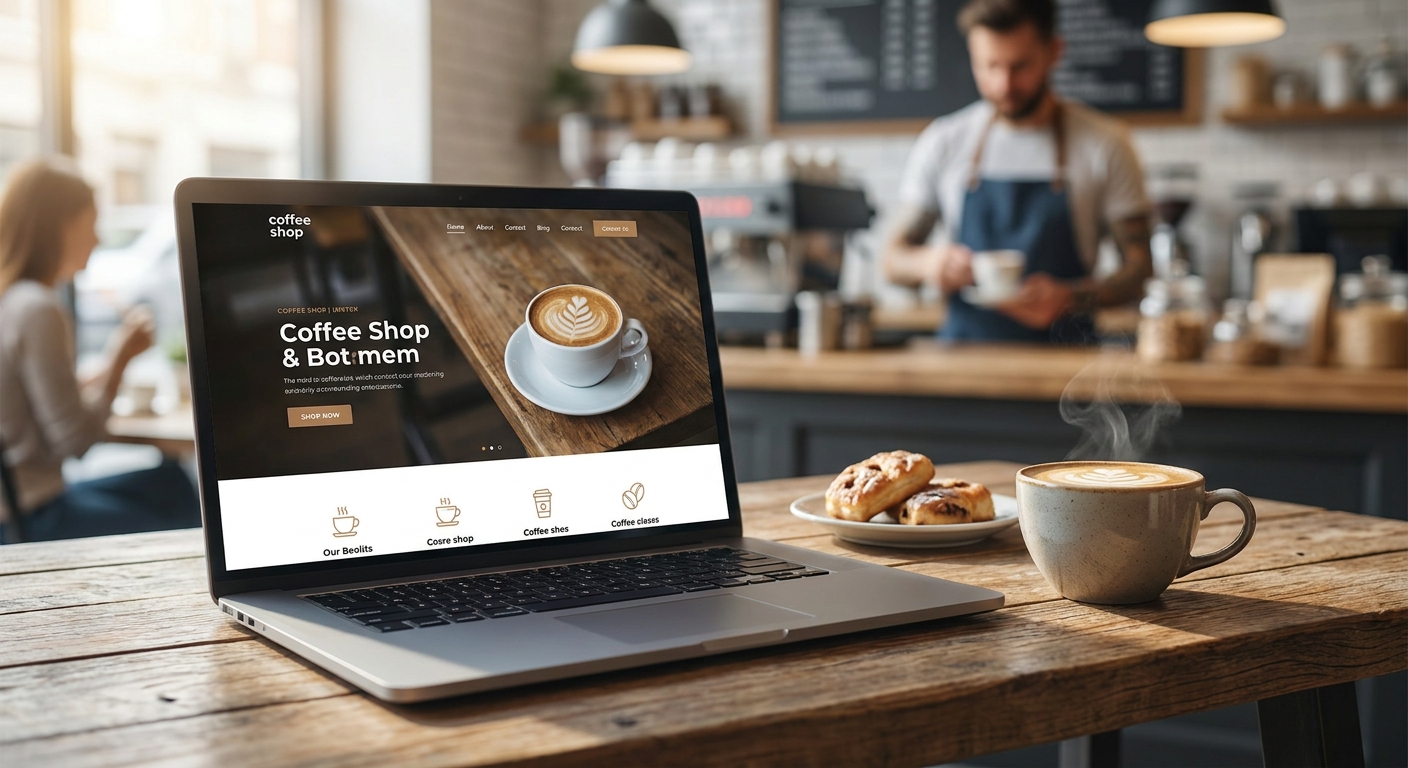
A coffee shop website has one job in 2026: get someone off Instagram or Google Maps and into your seats — or into your online order queue — before they scroll to a competitor. Most cafe sites fail that job with a slow homepage, a PDF menu, and no ordering link above the fold. Here's what web design for coffee shops actually needs to fix, and what to skip.
- A cafe site with online ordering above the fold outperforms a menu-only PDF site every time — build ordering in, not bolted on.
- Google Business Profile plus local SEO features matter more than a fancy homepage for foot traffic in 2026.
- Skip stock coffee-cup photography; real interior shots convert better and build trust faster.
- Mobile load time under 3 seconds is the baseline Google checks in 2026 — anything slower loses walk-ins searching nearby.
Why this matters
Most people looking for a coffee shop are standing somewhere else, phone in hand, deciding in under a minute. Your site has to answer three questions instantly: what do you sell, where are you, and can I order ahead. A slow, cluttered, or outdated site answers none of those and the visitor bounces to the next pin on the map.
This isn't a design-taste problem. It's a conversion problem, and in 2026 it's measurable in bounce rate, mobile load time, and abandoned Google Business Profile clicks.
Who this is for
This guide is for independent cafe owners, small coffee shop chains, and roastery-cafe hybrids that need a custom website built around ordering, hours, and location — not a generic restaurant template with a coffee cup swapped in. If you run one location or three, sell beans online, host events, or all of the above, the criteria below apply.
What to look for in web design for coffee shops
Menu and pricing clarity
A menu buried in a PDF or a scanned image is the single biggest conversion killer on cafe sites. It doesn't load fast on mobile, it's not searchable, and it looks abandoned the moment prices change. A menu built directly into the page, with sizes and prices as real text, updates in minutes and reads clean on any phone.
Online ordering integration
If a visitor can't order ahead from your homepage, you're sending them to a third-party app that takes a cut and owns the customer relationship. Ordering needs to live on your own domain, not just linked out. This is the single highest-leverage build decision a cafe makes in 2026.
Local search visibility
Coffee shop searches are almost entirely "near me" and map-pin driven. A site with weak local SEO signals — no structured address, no consistent business info, no Google Business Profile connection — loses to competitors who nailed the basics, even with a worse space or worse coffee.
Photography that sells the vibe
People choose a cafe on feel before they choose it on menu. Real photos of your counter, your seating, your baristas, and your drinks in daylight beat any stock photo of a generic latte. Stock photography reads as "chain" even when you're not one.
Mobile speed
A 2026 baseline: pages loading slower than 3 seconds on mobile get flagged by Google's Core Web Vitals and lose impatient walk-in searchers before the hero image even renders. Coffee shop visitors are moving people making fast decisions — slow sites lose them immediately.
Hours and location that update instantly
Holiday hours, temporary closures, and seasonal menu changes need to update the moment you change them, not after a developer gets back to you next week. A site you can edit yourself, with support behind it, is the difference between accurate hours and a Google review complaining you were "closed when the website said open."
Top picks: how to build it
The order-ahead build — the traffic driver. Ordering sits in the header, not buried three clicks deep, and syncs to a real point-of-sale system rather than a separate app link. One spec that matters: checkout in 2 taps or fewer from the menu page. Pair this with the guidance in best online ordering tools for restaurant websites before picking a provider. Buy — this is the build every cafe needs by 2026, no exceptions.
The neighborhood-first build — the safe pick. Built around Google Business Profile sync, structured address data, and location pages if you run more than one shop. One spec that matters: your address and hours match exactly across your site and your Google listing — mismatches quietly tank local rankings. Cross-reference against best local SEO features for small business websites before launch. Buy — this is the cheapest traffic you'll ever get.
The Instagram-ready build — the wildcard. Heavy on real photography, light on stock imagery, built for people who discover you visually before they ever see your menu. One spec that matters: hero image sized and compressed for a 3-second mobile load, not a 15MB DSLR export. Consider — worth it if your space or drinks are genuinely photogenic; skip it if your differentiator is speed and price, not aesthetic.
The multi-location build. Separate pages per location with unique hours, address, and ordering links, tied together under one brand homepage. One spec that matters: each location page needs its own structured data, not one shared address block. Consider — only relevant once you cross two locations; a single-shop cafe doesn't need this complexity yet.
The bare-minimum build — what to avoid. A single static page with a PDF menu, no ordering, and a contact form nobody checks. One spec that matters: zero conversion paths beyond a phone number. Skip — this loses walk-in and delivery revenue every single day it's live in 2026.
What to avoid
- PDF-only menus. They don't load fast, don't rank in search, and look neglected the second you raise prices.
- Third-party ordering links with no site integration. You pay platform fees and still don't own the customer relationship or the data.
- Generic coffee stock photography. It reads as corporate chain, not neighborhood cafe, and it undercuts the trust real interior shots build.
“If a visitor can't order ahead from your homepage, you're paying a third-party app to own your customer relationship.”
Verdict comparison
| Build | Best for | Key spec | Verdict |
|---|---|---|---|
| Order-ahead build | Any cafe doing takeout or delivery | Checkout in 2 taps | Buy |
| Neighborhood-first build | Any single- or multi-location shop | GBP and address sync | Buy |
| Instagram-ready build | Photogenic spaces, strong aesthetic | Sub-3-second hero load | Consider |
| Multi-location build | 2+ shops | Unique data per location | Consider |
| Bare-minimum static page | Nobody in 2026 | Zero conversion paths | Skip |
Get a custom cafe website built
Design, development, hosting, and support in one flat monthly plan. No upfront build fees.
FAQ
What's the best web design for coffee shops in 2026?
The best web design for coffee shops in 2026 puts online ordering in the header, syncs hours and address with Google Business Profile, and loads in under 3 seconds on mobile. Anything slower or ordering-free loses walk-in traffic to competitors.
Is a custom website better than a template for a cafe?
Custom code gives a cafe control over menu updates, ordering integration, and page speed that page builders and templates often slow down. Templates work for a basic hours-and-location page but struggle once you add ordering, multiple locations, or events.
How much does a coffee shop website cost in 2026?
Costs vary by scope, but flat monthly subscription plans that bundle design, development, hosting, and support with no upfront build fees are common in 2026. A one-time or larger build gets quoted separately based on what the site needs.
Do I need online ordering on my cafe website?
Yes, if you do any takeout, delivery, or mobile order-ahead business. A site without built-in ordering sends customers to third-party apps that take a cut and own the customer data.
Does a coffee shop need a website if it's already on delivery apps?
Yes, because delivery apps take a commission on every order and don't help local search rankings. A cafe's own site captures direct orders, repeat customers, and Google Maps visibility that apps don't share.
How important is Google Business Profile for a coffee shop?
It's one of the highest-leverage tools available since almost all cafe searches are location-based. A site connected to an accurate, consistent Google Business Profile ranks better in local map results than a disconnected one.
Should a cafe website use stock photos or real photos?
Real photos of the space, staff, and drinks convert better than stock photography, which reads as generic or corporate. Stock images undercut the neighborhood feel that makes people choose an independent cafe over a chain.
How fast should a coffee shop website load on mobile?
Under 3 seconds is the baseline Google checks through Core Web Vitals in 2026. Slower load times lose impatient walk-in searchers before the menu even appears.
One last thing
The cafes losing walk-in traffic in 2026 aren't losing on coffee quality — they're losing because their Google Business Profile address doesn't match their website footer, and Google quietly downranks that mismatch. Fix that one detail before touching a single photo or font choice.