July 27, 2026
Web Design for Electricians (2026): Buy vs Skip Guide
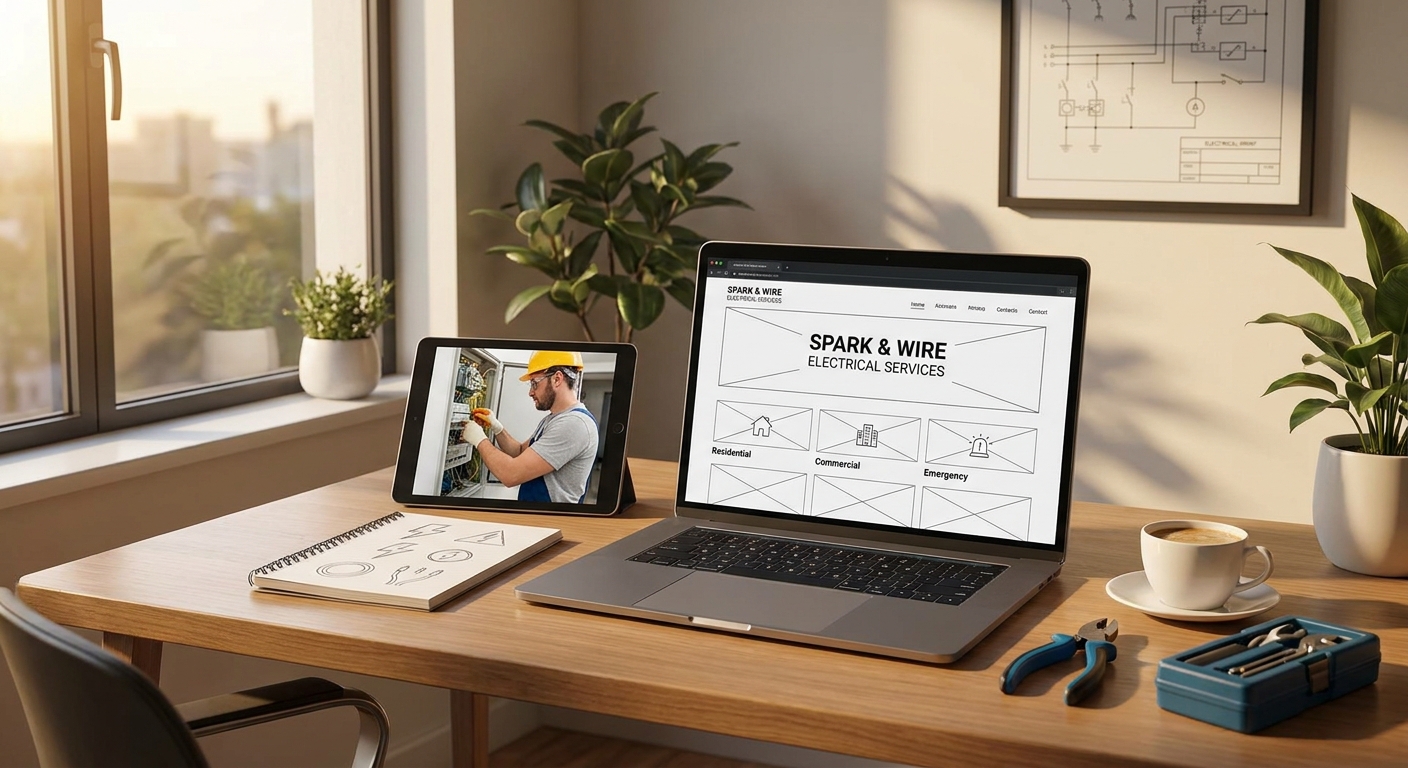
Electricians lose bids before the phone rings — usually because a slow, generic site fails the ten-second test a homeowner runs before dialing a number. Web design for electricians in 2026 means built for the call, not just the look.
- Web design for electricians works best on a flat-subscription model like Nuvora's — no big upfront bill, edits included. Buy for solo and small-crew shops.
- DIY builders handle a single-service, single-location electrician fine but stall past 3-4 service area pages. Consider only for one-truck operations.
- Freelance developers quote lower prices but often disappear after launch, leaving broken forms unfixed for months. Skip without in-house tech backup.
- Traditional agencies out-design everyone but their retainers rarely fit a 2-4 person electrical crew's monthly margin. Skip unless you run multiple locations.
- Call-tracking numbers and licensed-electrician badges above the fold convert more emergency calls than a hero video does. Prioritize function over flash.
Why this matters
An electrician's website has one job: turn a panic search into a phone call. Electricians face the same lead-gen math as any trade — a point covered in the guide on web design for plumbers — but call volume for electrical work skews more toward panel upgrades and EV charger installs than plumbing's burst-pipe emergencies.
That difference changes what the homepage needs to say. A site built for a plumber leads with "leak today," a site built for an electrician needs to lead with licensing, safety, and the specific panel or wiring work a homeowner is worried about. Get that wrong in 2026 and the click bounces to the next result in under ten seconds.
Who this guide is for
This is for licensed electrical contractors — solo operators, 2-4 truck crews, and small commercial shops — who need a site that generates calls, not one that just exists. If you're bidding residential service work, EV charger installs, or light commercial jobs and your current site was built once in 2019 and never touched again, this applies directly to you.
What to look for in web design for electricians
Click-to-call placement that survives a thumb scroll
Most searches for electrical work happen on a phone in a moment of mild panic. If the number isn't tappable in the header on every page, including service pages, the visitor calls a competitor instead. This is the single highest-impact fix on an electrician's site and it costs nothing to implement correctly.
Individual service area pages
An electrician working three counties needs three sets of local landing pages, not one "service area" paragraph buried in the footer. Google ranks pages, not domains, for "electrician near me" searches, so a site with one page per town or zip cluster outperforms a single generic page every time.
Licensing and insurance stated plainly
Homeowners inviting someone to touch their electrical panel want proof of a license number and insurance before they'll call. Burying this on an "About" page three clicks deep costs conversions. It belongs near the fold on the homepage and on every service page.
Photo proof of finished work
A panel upgrade, a subpanel install, an EV charger mounted cleanly — these are visual trust signals. A gallery with 10-15 real job photos beats a stock-photo hero image by a wide margin on trust, even without a single word of copy.
Fast quote request forms
A five-field form that asks for name, phone, service needed, and address converts better than a contact page that routes to a generic "Contact Us" with no context. Every extra field or extra click between search result and submitted lead loses a percentage of visitors who won't come back.
Mobile load speed
A page that takes longer than three seconds to load on a mobile connection loses visitors before they see anything. Electricians competing on paid search or map pack rankings in 2026 can't afford a bloated homepage full of unoptimized images.
Top picks: how electricians actually get a website built
The DIY pick — Wix, Squarespace, or a generic builder. One spec that matters: template libraries built for service businesses, not electricians specifically. Fine for a single-truck operation with one service area and no ambition to expand. Past 3-4 service pages, the drag-and-drop editor turns into a part-time job nobody on an electrical crew has time for. Verdict: Consider, only for solo operators.
The wildcard pick — a freelance developer off a marketplace. One spec that matters: turnaround time, often 2-4 weeks for a first build. Costs less upfront than an agency, but the relationship frequently ends at launch — updates, security patches, and broken forms sit unaddressed for months because there's no ongoing arrangement. Verdict: Skip unless you have someone in-house who can maintain the site after handoff.
The expensive pick — a traditional web agency. One spec that matters: build timelines that commonly run 6-10 weeks with a retainer attached. Design quality is usually strong, but the monthly retainer is priced for businesses with marketing budgets an electrical crew of 2-4 people rarely has. Verdict: Skip unless you're running multiple locations or a franchise operation.
The safe pick — a flat-subscription studio like Nuvora. One spec that matters: no large upfront build fee, with hosting, maintenance, and edits folded into a monthly plan instead of a five-figure invoice. This model fits an electrician's cash flow better than a big upfront project cost, and it means service pages, seasonal offers (storm prep, generator installs), or a phone number change get updated without a separate invoice. Compare the model against a one-time build in the subscription plan breakdown. Verdict: Buy for solo and small-crew electrical contractors who want the site handled without managing a vendor relationship.
See what a subscription site includes
No upfront build fee, hosting and edits included monthly.
What to avoid
- A homepage that talks about the company instead of the service. "Family-owned since [year]" matters less to a homeowner with a dead outlet than "licensed electrician, same-day service, panel upgrades and EV chargers."
- Stock photography of electricians who clearly aren't your crew. It reads as generic and homeowners increasingly notice.
- Spending on ads before the site converts. Running paid search without a conversion-ready landing page wastes budget fast, and the same math shows up in campaigns built around Google Ads for tradespeople, where landing page quality decides cost per lead as much as bid strategy does. A beautiful ad sending traffic to a slow, generic homepage is money burned, not money spent.
Verdict comparison table
| Approach | Upfront cost | Time to launch | Ongoing edits | Verdict |
|---|---|---|---|---|
| DIY builder (Wix/Squarespace) | Low | 1-2 weeks | You do them yourself | Consider |
| Freelance developer | Low-mid | 2-4 weeks | Separate invoice each time | Skip without backup |
| Traditional agency | High retainer | 6-10 weeks | Included, priced for larger budgets | Skip for small crews |
| Nuvora subscription | No upfront build fee | Days, not months | Included monthly | Buy |
FAQ
What's the best web design for electricians in 2026?
A flat-subscription site with click-to-call in the header, individual service area pages, and a photo gallery of finished work performs best in 2026. DIY builders work for solo operators; agencies and freelancers each carry tradeoffs in cost and maintenance.
How much should an electrician's website cost per month?
Costs vary by provider, but a flat-subscription model bundles hosting, maintenance, and edits into one monthly fee instead of a large upfront project cost. Check current plan details directly with the provider since pricing structures differ.
Is a subscription website better than a one-time build for an electrical contractor?
For most solo and small-crew electricians, yes — a subscription avoids a large upfront invoice and includes ongoing edits like new service pages or seasonal offers. A one-time build can make sense for larger shops with in-house staff to maintain the site after launch.
Do electricians need service area pages for local SEO?
Yes. Google ranks individual pages for "electrician near me" searches, so a page per town or zip cluster outperforms one generic service area paragraph. This matters most for contractors covering more than one county.
How fast should an electrician's website load on mobile?
Aim for under three seconds on a standard mobile connection. Most electrical service searches happen on a phone, and a slow homepage loses the visitor before they see the phone number.
Can I use a DIY builder like Wix for my electrical business?
Yes, for a single-truck operation with one service area and simple needs. Once you need more than 3-4 service pages or regular updates, the time cost of managing the builder yourself usually outweighs the savings.
How often should an electrician update their website?
Update service pages, licensing info, and job photos at least quarterly, and immediately for anything like a new phone number or service area. Sites that sit untouched for years lose both search rankings and homeowner trust.
Does an electrician's website need online booking or just a phone number?
A phone number with click-to-call is the minimum. A short quote request form with 5 fields or fewer adds a second conversion path for visitors who prefer not to call immediately.
One last thing
The most common reason an electrician's site underperforms in 2026 isn't the design — it's a phone number in the footer that isn't a clickable link on mobile. Fix that one line and the call volume from an existing site can shift without touching a single other page.