August 6, 2026
Web Design for Fencing Contractors: 2026 Buying Guide
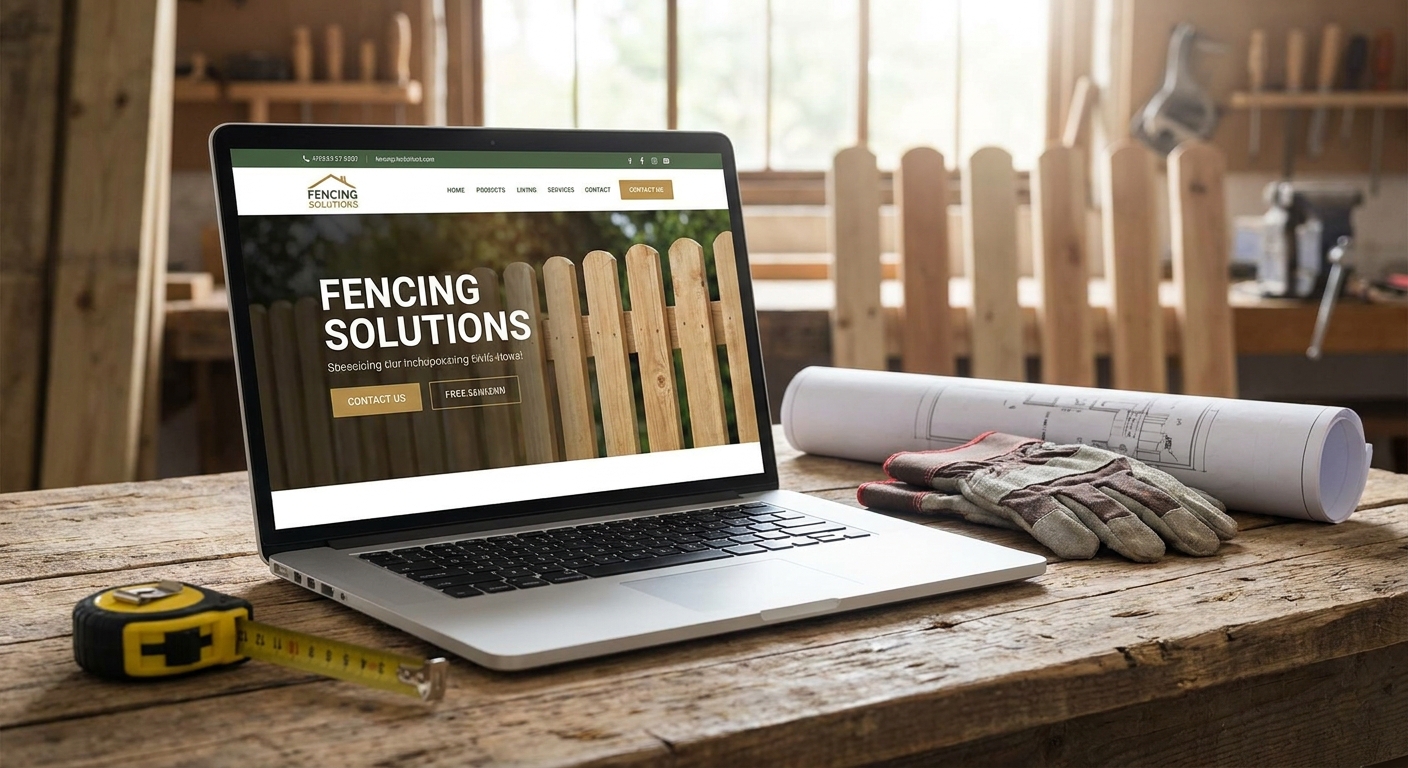
Fencing contractors lose bids before the estimate call ever happens — a slow, generic website gets a homeowner clicking back to Google in seconds. This guide covers what a fencing contractor's website actually needs in 2026, which Nuvora plan fits which crew size, and what to skip when a web design company pitches you a template dressed up as custom work.
- Web design for fencing contractors in 2026 needs quote forms, material galleries, and local service-area pages, not a generic template.
- Nuvora's Growth plan fits multi-crew fencing companies scaling past one truck: buy it.
- Starter fits solo installers who need core pages and zero upfront build cost: buy it.
- Skip flashy portfolio sites that ignore mobile load speed; job-site browsing punishes slow pages.
- A Tailored quote fits commercial fencing and HOA contract work needing custom scope: consider it.
Why this matters
A fencing estimate rarely closes on the first call. Homeowners compare three to five contractors before picking up the phone, and the website is what decides which ones make the shortlist.
Fencing is also a visual trade — wood, vinyl, chain-link, aluminum, and wrought iron all look and cost differently, and buyers want to see the actual material before they call. A site built on a generic small-business template flattens that distinction and reads like every other contractor page in the search results.
Generic web design for fencing contractors also tends to skip the local search side entirely. In 2026, a fence company competing only on "fence installation" without city or material-specific pages is invisible next to a competitor who built those pages in.
Who this is for
This guide is for three buyer types: solo fence installers running one truck and doing their own estimates, three-to-eight person crews handling residential wood, vinyl, and chain-link installs across a metro area, and larger commercial fencing companies bidding municipal, HOA, or multi-site contracts. Each of these needs a different mix of pages, speed, and support — not the same stock template with a new logo.
What to look for in web design for fencing contractors
Instant quote request forms
A fencing job rarely gets quoted on the spot — the homeowner needs measurements, material choice, and gate count before a number makes sense. A form that captures those details up front (linear footage, material, property type) cuts the back-and-forth before a crew ever drives out. A contact form with just "name, email, message" loses that lead to whoever asks better questions first.
Fence-type project galleries
Buyers pick a material before they pick a contractor. A gallery organized by fence type — wood privacy, vinyl, chain-link, aluminum, wrought iron — lets a homeowner self-select into the right conversation instead of scrolling one undifferentiated photo feed. This matters more for fencing than almost any other trade because the visual difference between materials is the entire sales pitch.
Local service-area pages
Fencing is a hyper-local trade — a homeowner in one suburb won't call a contractor thirty minutes away unless the site proves service there. Dedicated pages per city or service zone, built around real page content rather than a single "areas we serve" list, are what actually rank for "fence installation [city]" searches in 2026. Local SEO features for small business websites covers what those pages need structurally.
Mobile load speed
Most fencing leads come from a phone, often while someone's standing in their own yard measuring the property line. A site that takes more than a few seconds to load on a job-site connection loses that visitor to the next search result. Page weight and image compression matter more here than design flourish.
Licensing, insurance, and warranty signals
Fencing work involves property lines, permits, and sometimes HOA approval — homeowners want proof of licensing and insurance before they let a crew dig postholes. A site that buries this information (or omits it) reads as less trustworthy than one that puts it near the quote form.
Get your fencing site built right
Custom code, quote forms, and local pages built for your service area.
Top picks for fencing contractor websites
Starter — the safe pick for solo operators
Starter fits a one-truck fencing operation that needs core pages (home, services, gallery, contact, service area) without a big upfront build cost. It's a flat monthly subscription with zero upfront build fees, which matters for a contractor whose cash is tied up in materials and equipment, not marketing spend. Verdict: Buy for solo installers and two-person crews just getting a real site off the ground in 2026.
Growth — the workhorse for scaling crews
Growth is built for fencing companies running multiple crews and multiple service areas at once — more pages, more local SEO structure, and ongoing support baked into the website subscription plans model. This is the plan for a company that outgrew its first website within a year and needs a site that keeps up with hiring. Verdict: Buy for fencing businesses adding crews or service zones in 2026.
Tailored — the custom fit for commercial fencing
A Tailored quote fits fencing companies bidding commercial, municipal, or HOA-scale contracts that need something a subscription tier doesn't cover — a bid portal, a franchise-style multi-location structure, or heavier technical requirements. It's scoped project by project rather than fit into a fixed tier. Verdict: Consider if your fencing company is past residential-only work and needs something built around a specific contract type.
What to avoid
- Generic contractor templates. A page-builder theme reused across thousands of home-services sites looks identical to three other fence companies in the same search results — it doesn't differentiate your material work or your crews.
- Portfolio-only sites with no local pages. A beautiful gallery with no service-area content won't rank for "fence contractor near me" searches, which is where most fencing leads actually start.
- One-time builds with no maintenance plan. A site launched once and never touched again drifts out of date, falls behind on security patches, and eventually stops ranking. Fencing contractors need ongoing hosting and support, not a one-off delivery.
Verdict comparison
| Plan | Quote form built for fencing details | Fence-type galleries | Local service-area pages | Ongoing hosting & support | Verdict |
|---|---|---|---|---|---|
| Starter | Yes | Yes | Basic | Included | Buy (solo/small crew) |
| Growth | Yes, advanced | Yes | Multiple, SEO-structured | Included | Buy (scaling crews) |
| Tailored | Scoped to project | Scoped to project | Scoped to project | Included | Consider (commercial) |
FAQ
What does web design for fencing contractors cost in 2026?
Nuvora's Starter and Growth plans run as flat monthly subscriptions with no upfront build fees, and cancellation requires notice rather than a contract buyout. Larger commercial fencing sites needing custom scope get a Tailored quote instead of a fixed tier.
Do fencing contractors need a different website than other contractors?
Yes — fencing is more visual and more material-dependent than trades like plumbing or HVAC, so galleries organized by fence type (wood, vinyl, chain-link, aluminum, wrought iron) matter more here. Local service-area pages also carry more weight because fencing customers rarely travel outside their own neighborhood for a quote.
Should a fencing contractor use a template or a custom-built site?
A custom-built site differentiates a fencing company from competitors running the same stock theme, and it allows quote forms and galleries structured around actual fence materials rather than generic service fields. Templates are faster to launch but harder to rank and harder to tell apart from the next contractor's site.
How many pages does a fencing contractor website need?
A solo operator can run effectively on five to seven pages: home, services, gallery, service area, and contact. A multi-crew company usually needs more — separate pages per service area or fence material to capture local search terms.
Is mobile speed really that important for a fencing website?
Yes — most fencing leads search from a phone, often standing in the yard they want fenced. A slow-loading page on that connection loses the visitor to the next contractor in the search results before the quote form even loads.
What's the difference between Starter, Growth, and Tailored plans?
Starter covers core pages for solo operators with no upfront build cost. Growth adds more pages, more local SEO structure, and fits companies running multiple crews. Tailored is a custom quote for commercial or multi-location fencing work that doesn't fit a fixed tier.
Do I need separate pages for each fence material I install?
It helps — homeowners search by material ("vinyl fence installation," "wood privacy fence cost") more often than by generic "fencing contractor" terms. Dedicated pages per material give each of those searches a page built to answer it directly.
How often should a fencing contractor update their website?
Beyond a full redesign, ongoing maintenance matters more — security patches, speed checks, and fresh project photos keep a site both secure and current through 2026 and beyond. A site built once and never revisited tends to fall behind on both fronts within a year or two.
One last thing
The highest-converting page on most fencing contractor sites isn't the homepage — it's the individual service-area page built around a city and a material combination. A homeowner searching "wood fence installation Plano" wants a page that answers that exact query, not a homepage that mentions six services and twelve cities in passing. Fencing companies that build those pages out one city and one material at a time tend to out-rank competitors with a flashier homepage and nothing underneath it.