August 5, 2026
Web Design for Florists: What to Build First in 2026
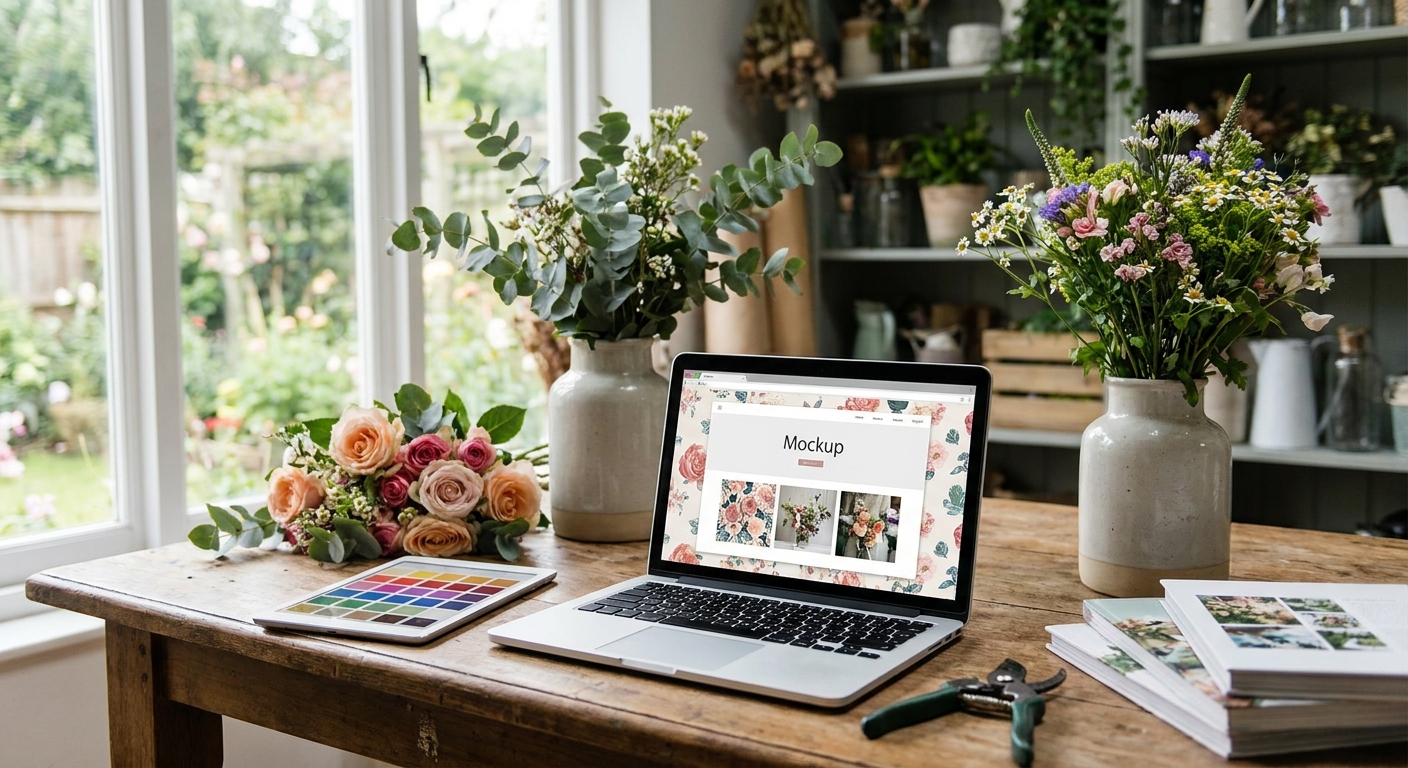
Flower shops sell a product that dies in five days and sells hardest on four calendar dates a year. A florist's website has to handle same-day delivery cutoffs, seasonal photo turnover, and wedding inquiries without falling apart the week before Mother's Day. This guide breaks down what actually matters in web design for florists and calls out four build decisions worth making before 2026's peak seasons hit.
- Web design for florists must handle same-day delivery cutoffs and holiday order spikes without crashing checkout.
- Mobile ordering flow matters more than desktop design for florists in 2026 — most orders come from a phone.
- Skip page-builder templates for wedding and event florists; they cap out on custom delivery-zone logic. Buy custom-built instead.
- Local SEO and Google Business Profile integration decide whether a florist shows up for "flower delivery near me" searches.
Why this matters
A florist's website isn't a brochure. It's the order terminal for Valentine's Day, Mother's Day, and every funeral, wedding, and "I forgot our anniversary" purchase that happens on a deadline. If the site can't confirm a same-day delivery zip code or crashes under holiday traffic, the sale goes to the florist listed above it on Google.
Most flower shop sites built on generic templates in the last five years were never designed for that pressure. They were designed to look pretty in a demo. By 2026, the gap between a florist site that converts and one that just displays photos has gotten wider, because delivery logistics, local search, and mobile checkout speed all got harder to fake with a drag-and-drop builder.
Who this is for
This guide is for flower shop owners and managers who are either replacing a dated site or building their first real one — independent florists doing 30 to 200 orders a week, shops that lean on weddings and corporate accounts, and multi-location florists coordinating delivery zones across a metro area. If you're comparing custom website design for small businesses against a DIY builder, this is the decision framework to use before you sign anything.
What to look for in web design for florists
Mobile-first ordering flow
Most flower orders in 2026 start on a phone, often typed one-handed between meetings. If checkout takes more than three taps to get from product page to confirmed delivery date, shoppers bail and call a competitor. Test any florist site design on a phone first, not a laptop.
Same-day delivery logistics baked into the site
A florist site needs delivery-zone logic tied to a real cutoff time, not a static "we deliver locally" line. Customers need to see, before checkout, whether a same-day order placed at 11am will actually make it out before the noon van run. Sites that fake this with a generic shipping calculator lose orders and generate angry calls.
Photo quality that matches what actually ships
Stock botanical photography is the single fastest way to lose trust with a flower buyer who has been burned by a bouquet that didn't match the listing. Real shop photos, shot in the cooler or on the counter, convert better than styled stock every time.
Seasonal and event content that can flex fast
Valentine's week, Mother's Day, and prom season each need different homepage messaging, different featured arrangements, and different urgency copy — sometimes with two weeks' notice. A site locked into a rigid template forces someone to fight the builder instead of updating the page.
Local SEO and Google Business Profile integration
"Flower delivery near me" and "florist open now" are high-intent, near-instant-purchase searches. A florist site that isn't structured for local search, with hours, service area, and schema markup synced to a Google Business Profile, is invisible at the exact moment someone is ready to buy.
Wedding and event inquiry handling
Wedding and corporate accounts are the highest-margin work most florists do, and they start with an inquiry form, not a cart checkout. A site that buries the consultation request behind a generic contact page loses those leads to florists with a dedicated, visible intake flow.
Top picks: what to build first
1. Same-day delivery ordering with real cutoff logic — the load-bearing pick. Spec that matters: delivery cutoff time displayed before checkout, not after. A florist doing even 40 same-day orders a week loses real revenue every time a customer can't confirm delivery timing and abandons the cart. This is the single highest-impact build for a flower shop site in 2026. Check e-commerce features built for small retail sites before choosing a platform. Buy.
2. Local SEO and Google Business Profile sync — the visibility pick. Spec that matters: schema markup for local business type, service area, and hours tied directly to the profile Google shows in map results. Florists depend on last-minute, near-me searches more than almost any other retail category. Get the specifics on local SEO features for small business websites before launch. Buy.
3. Real shop photography over stock botanicals — the trust pick. Spec that matters: photos shot within the last 90 days, updated each season. A bouquet page with five-year-old stock photography reads as neglected, even if the flowers inside are fresh. Read how to choose website photos that build customer trust before the next photo shoot. Buy.
4. A dedicated wedding and event inquiry flow — the margin pick. Spec that matters: a form that asks for date, budget range, and guest count up front, routed straight to whoever books consultations. Wedding work often carries higher ticket sizes than daily retail orders, and a buried contact form kills that pipeline before it starts. Consider — worth building once daily ordering and local SEO are solid, not before.
5. A flat monthly build instead of a one-off template purchase — the maintenance pick. Spec that matters: ongoing hosting, security patches, and content updates included, not billed separately every time a holiday promo needs to go live. Flower shops update content more often than most small businesses because of the holiday calendar. See how website subscription plans for small businesses compare to a pay-once template before deciding. Buy if you update seasonal content more than four times a year.
“If a florist's site can't confirm a same-day order past noon, it's costing the shop its best margin day.”
Build a florist site around delivery deadlines
Custom design, hosting, and support on a flat monthly plan. No upfront build fees.
What to avoid
- Generic e-commerce templates built for general retail. They handle a t-shirt sale fine and fall apart the moment you need zip-code-based delivery cutoffs for perishable product.
- Stock photography of tulips and peonies that don't match your actual inventory. It photographs well in a sales demo and erodes trust the first time a customer compares it to what showed up.
- A one-time build with no update plan for holiday content. A florist site that can't be edited fast in the two weeks before Mother's Day is a site actively costing sales during the highest-revenue stretch of the year.
Verdict comparison
| Build priority | Why it matters for florists | Verdict |
|---|---|---|
| Same-day delivery ordering logic | Prevents cart abandonment on time-sensitive orders | Buy |
| Local SEO + Google Business Profile sync | Wins "near me" and last-minute searches | Buy |
| Real, seasonal shop photography | Builds trust before the sale | Buy |
| Wedding/event inquiry flow | Captures high-margin consultation leads | Consider |
| Flat monthly build vs. one-off template | Keeps holiday content editable year-round | Buy for frequent updaters |
FAQ
What does web design for florists cost in 2026?
Custom flower shop websites typically run on flat monthly subscription plans covering design, hosting, and support rather than a single upfront build fee. Pricing depends on whether the site needs same-day delivery logic, online ordering, and event inquiry forms, or just a brochure-style presence.
Do florists need e-commerce checkout or just a contact form?
Most florists doing regular retail volume need full e-commerce checkout with delivery-zone logic, not just a contact form. A contact-only site works for florists focused entirely on wedding and event work with no daily retail orders.
Is a template builder good enough for a flower shop website?
Template builders handle basic product listings but struggle with real-time delivery cutoff logic and seasonal content changes that florists need multiple times a year. Custom-built sites handle both without fighting the platform.
How important is mobile design for florist websites?
Mobile design is the primary design consideration for florist websites in 2026, since most delivery orders are placed from a phone under time pressure. A slow or confusing mobile checkout directly costs same-day orders.
What photos should a florist website use?
Florist websites should use real, recent shop photography instead of stock botanical images, refreshed each season to match current inventory. Photos older than a year read as neglected even when the flowers themselves are fresh.
How does local SEO help a florist's website?
Local SEO connects a florist's website to "near me" and "open now" searches, which convert almost immediately because the buyer needs flowers same-day. Schema markup and a synced Google Business Profile are the two pieces that make this work.
Should florists build a separate page for weddings?
Yes — a dedicated wedding and event inquiry page with a date, budget, and guest count field routes high-value leads directly to the person who books consultations. Burying that intake behind a general contact form loses those inquiries to competitors with a clearer flow.
How often should a florist update their website?
Florists should plan on updating homepage content and featured arrangements at least four to six times a year around Valentine's Day, Mother's Day, prom, wedding season, and winter holidays. A subscription-based site makes those updates part of the plan instead of a separate invoice each time.
One last thing
The florists who lose the most revenue in 2026 aren't the ones with outdated logos — they're the ones whose site can't tell a customer, in the next ten seconds, whether flowers ordered right now will arrive today. Fix that one thing before touching anything else on the site.