August 4, 2026
Web Design for Yoga Studios: Buyer's Guide 2026
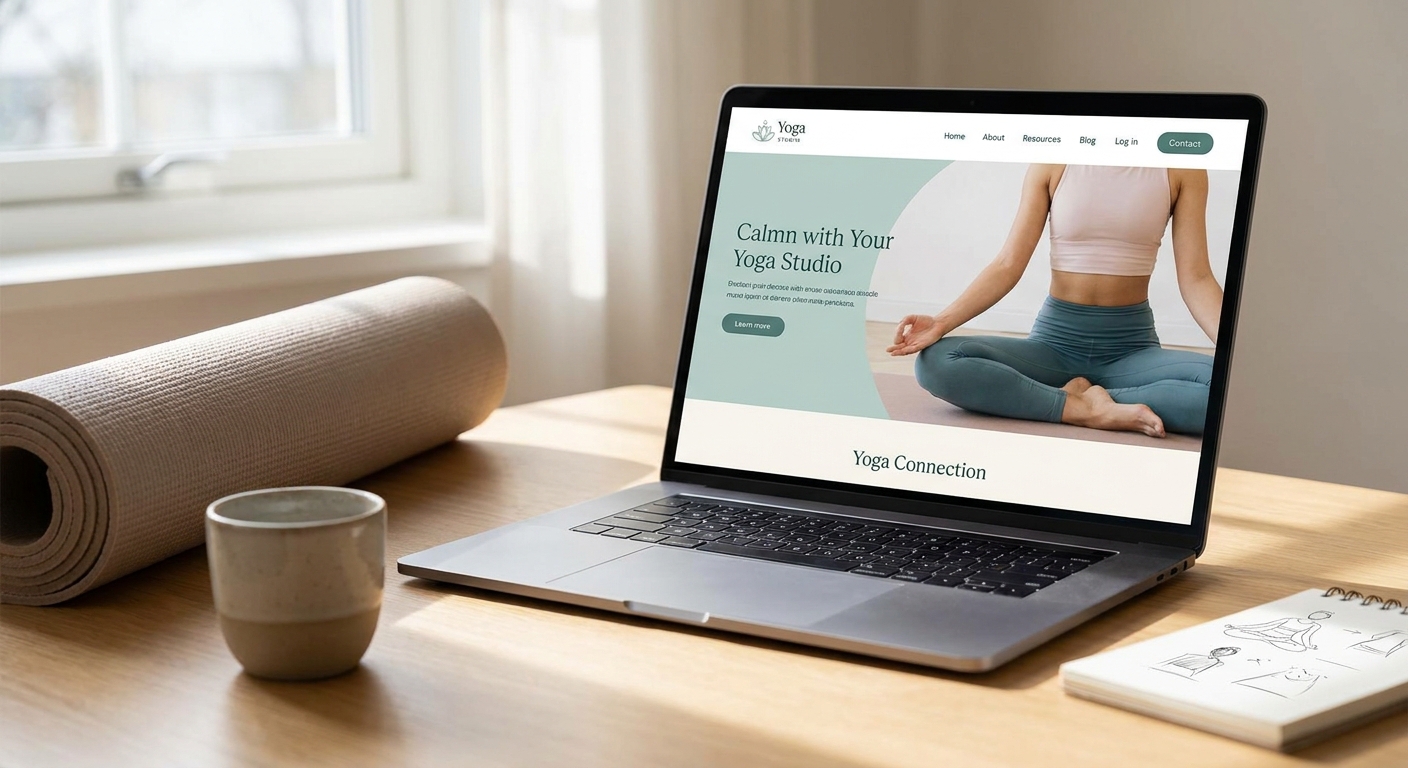
Yoga studios lose class bookings to sites that look like a template from 2018 — slow load times, no schedule integration, stock photos of people who clearly don't do yoga. Here's what to look for, what to avoid, and which build approach actually fits a studio's size and stage in 2026.
- Web design for yoga studios needs live class schedules, mobile speed, and local SEO — not just a pretty homepage. Buy.
- Starter plans fit single-location studios; Growth plans fit multi-location or hybrid online/in-studio brands. Buy for most.
- Tailored builds make sense only when a studio needs a custom membership portal or video library integration. Consider.
- Generic template builders that can't handle real-time schedule changes are a Skip for growing studios in 2026.
Who this is for
This guide is for yoga studio owners and instructors deciding how to build or rebuild a website in 2026 — solo teachers running a single room, boutique studios with a handful of instructors, and multi-location wellness brands adding online classes alongside in-studio ones. If class schedules change weekly, if drop-in and membership sales both happen on the site, and if half your traffic shows up on a phone between two meetings, this is the buyer profile the criteria below is built for.
Why this matters
A yoga studio's website is a booking engine first and a brand statement second. Visitors decide whether to show up to a 6am class based on how fast they can find the schedule and hit "reserve." Get that wrong and the custom web design work underneath it doesn't matter — the visitor bounces before they see it.
What to look for in web design for yoga studios
Live class schedule integration
A static PDF schedule is a Skip in 2026 — instructors swap classes, studios add pop-ups, and a schedule that isn't tied into the booking flow creates no-shows and refund requests. The schedule needs to update in real time and link directly to reservation, not just display times.
Mobile speed
Most studio visitors check the schedule from a phone in the parking lot or between errands. Pages should load in under 3 seconds on mobile and hero images should be compressed under 200KB — anything slower and the visitor picks a competitor studio that loads faster.
Local SEO for "yoga near me" searches
Studios compete on proximity searches, not brand searches. Location pages, a claimed Google Business Profile, and local SEO features built into the site structure matter more here than they do for an e-commerce brand.
Booking and membership flow
Drop-ins, class packs, and monthly unlimited memberships each need a distinct path to purchase. A site that buries membership options under a generic "contact us" link is losing recurring revenue the studio already earned through loyalty.
Trust signals that fit wellness
Instructor certifications, real studio photos, and specific class descriptions (restorative vs. vinyasa vs. hot) build trust faster than stock photography ever will. A visitor deciding between two studios picks the one where the instructor bios feel real.
Easy content updates without a developer
Schedules, workshops, and teacher trainings change constantly. The studio owner needs to update this content directly — not file a ticket and wait three days for a developer to swap a class time.
Get a website built for class bookings
Custom design, hosting, and support on a flat monthly plan — no upfront build fees.
Top picks by studio stage
The safe pick: a Starter-style build for single-location studios. One room, one schedule, one instructor roster — this covers class listings, an about page, contact and directions, and a booking link. Buy if the studio runs one location and doesn't need a custom membership portal yet.
The wildcard: a Growth-style build for studios scaling into hybrid classes. This tier supports multiple locations or an online-plus-in-studio model, deeper appointment scheduling integration, and a blog for SEO content around class types and instructor spotlights. Buy for studios adding a second location or launching on-demand classes in 2026.
The custom route: a Tailored quote for studios with non-standard needs. Video-on-demand libraries, custom membership tiers, or integrations with a specific studio management platform push a build outside a standard plan. Consider this route only if the studio has already outgrown a standard schedule-and-booking setup — most studios haven't yet.
Skip: a generic drag-and-drop template with a plugin bolted on for scheduling. It looks fine on day one and breaks the first time the studio needs a feature the plugin wasn't built for.
What to avoid
- Autoplay background music or video on the homepage — it feels calming in a demo and annoys every visitor browsing at their desk.
- A schedule buried three clicks deep. If "book a class" isn't visible above the fold, the studio is losing bookings to friction, not competition.
- Stock photography of yoga poses that don't match the studio's actual class style. A visitor comparing a hot yoga studio against a restorative one notices the mismatch immediately.
“If a visitor can't find the class schedule in one click, the redesign already failed.”
Verdict comparison
| Build stage | Best for | Booking depth | Local SEO built in | Verdict |
|---|---|---|---|---|
| Starter-style | Single-location studio | Basic booking link | Yes | Buy |
| Growth-style | Multi-location or hybrid studio | Full scheduling integration | Yes, plus blog content | Buy |
| Tailored | Studio with custom membership/video needs | Custom-built | Custom-built | Consider |
| Generic template + plugin | Nobody scaling past year one | Fragile, plugin-dependent | Minimal | Skip |
FAQ
What's the best web design for yoga studios in 2026?
The best web design for yoga studios in 2026 puts a live, bookable class schedule above the fold and loads fast on mobile. A Starter-style build covers single-location studios; a Growth-style build fits multi-location or hybrid online-in-studio studios.
How much does a website for a yoga studio cost?
Costs vary by scope and features needed, including how deep the booking and membership integration goes. Ask for a quote scoped to the studio's specific schedule and membership setup rather than a flat industry number.
Do yoga studios need online booking on their website?
Yes — a static schedule without a direct booking link creates friction that costs reservations. Real-time schedule updates tied to the booking flow are standard for studios in 2026.
Is a template builder good enough for a yoga studio site?
Template builders work for a studio's first year but tend to break when schedules, memberships, or a second location get added. Custom-coded sites handle those changes without a plugin workaround.
How long does it take to build a yoga studio website?
Timelines depend on how much content — schedules, instructor bios, photos — the studio has ready before the build starts. Preparing content in advance shortens the process considerably.
What should a yoga studio homepage include?
A yoga studio homepage needs the class schedule or a direct link to it, instructor names and certifications, real studio photos, and a clear path to book a first class. Everything else is secondary.
Does a yoga studio website need to be mobile-friendly?
Yes — most schedule checks happen on a phone before or after a class. Pages should load in under 3 seconds on mobile or visitors bounce to a faster competitor.
Can a yoga studio website integrate with class scheduling software?
Most modern builds integrate with standard scheduling and booking platforms rather than replacing them. The website becomes the front door; the scheduling software handles the backend logic.
One last thing
The studios that win the "yoga near me" search in 2026 aren't the ones with the prettiest homepage — they're the ones where the schedule updates the same day an instructor swaps a class, with zero developer ticket in between. That single detail decides more bookings than any hero image ever will.