July 25, 2026
Website Design for Event Planners: 2026 Verdict
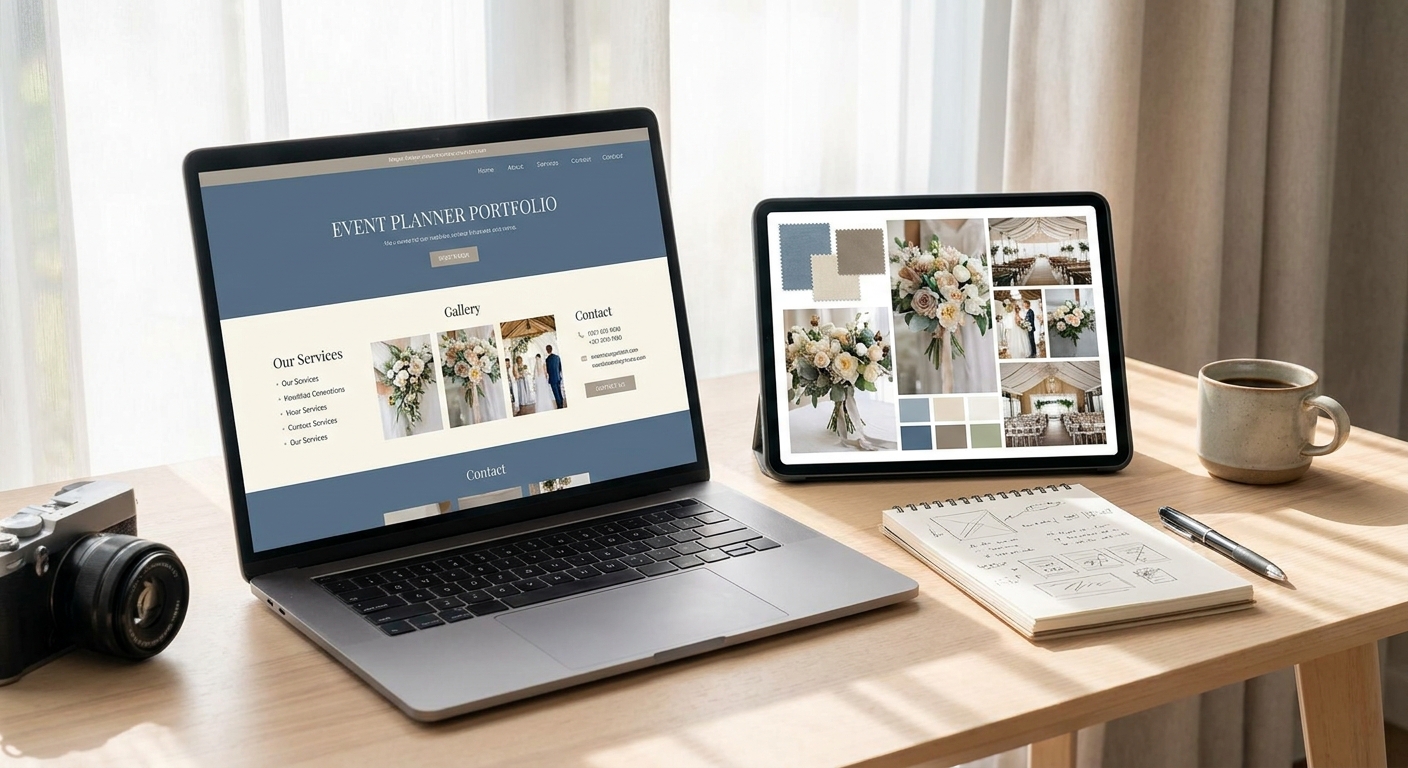
Event planners sell trust before anything else, and the website is where a bride, a corporate meeting planner, or a nonprofit gala chair decides whether you're worth an email. This guide breaks down what website design for event planners actually has to do in 2026, which build approach fits which stage of your business, and where a flat-subscription studio like Nuvora fits next to DIY builders and one-off freelance hires.
- Website design for event planners needs a photo-first homepage and a booking form above the fold, not a generic template.
- DIY builders work fine under roughly 10 booked events a year; past that, the gaps start costing inquiries.
- A freelance one-off build without a maintenance plan goes stale within a season - Skip unless a retainer is attached.
- Nuvora's subscription model wins for planners who update packages seasonally and don't want a five-figure rebuild bill - Buy.
- A portfolio-only page with no pricing structure or contact form is the single biggest lead-killer in this niche.
Why this matters
An event planner's website is doing sales work a storefront never has to do: it has to prove taste, prove reliability, and answer "can you do my date" without a phone call. Nuvora's subscription website plans exist because most planners don't have six months and a five-figure budget to get that right, and a stale site built once in 2022 still looks like it was built once in 2022.
The planners who win inquiries in 2026 aren't the ones with the fanciest photography - they're the ones whose site loads fast, shows real events, and gets updated every time a package changes. That's a maintenance problem as much as a design problem, and most builds ignore it entirely.
Who this is for
This guide is for solo and small-team event planners - wedding coordinators, corporate meeting planners, nonprofit gala producers - who are past the "friend built me a site in Wix" stage and starting to lose leads to competitors with cleaner, faster sites. If you're booking fewer than five events a year and testing the business, skip ahead to the DIY section. If you're turning down work because your site doesn't match your actual pricing tier, keep reading.
What to look for in website design for event planners
A gallery that loads fast, not just looks good
Event planning sells visually, but a gallery stuffed with 40 uncompressed photos will load in 6+ seconds on mobile and lose the visitor before they scroll. The gallery-heavy site structure built for photographers solves the same problem event planners face: real photos, compressed properly, without killing page speed.
A booking form that captures date and event type up front
A generic "contact us" form makes a corporate planner scanning ten sites in one lunch break move on to the next tab. The form needs to ask event date, guest count, and event type in the first three fields - not name and email followed by a blank message box.
Package pricing structure, even without exact numbers
You don't have to publish exact prices, but you do have to show tiers - a "Day-Of," "Partial Planning," and "Full Service" structure, for example. A pricing page with zero structure forces every visitor to call before they know if you're even in their range, and most won't call.
Mobile-first layout
Couples check venue websites standing in the parking lot of the venue itself. A site that requires pinch-zooming to read a package description loses that visitor on the spot, and Google's mobile-first indexing already penalizes slow, unresponsive layouts in search rankings.
Vendor and venue cross-linking
Referral traffic from venues, caterers, and photographers is some of the highest-intent traffic an event planner gets. A site with no "preferred vendors" or "as seen at" section wastes that channel entirely.
SEO structure built around niche and city
"Wedding planner" alone is a brutal keyword nationally. "Corporate event planner Denver" or "nonprofit gala producer Austin" converts because it's specific - the site's page structure needs to support that, not bury it in one generic "services" page.
Your build options, ranked
The DIY builder (Squarespace, Wix) - the cheapest starting point
A drag-and-drop builder gets a site live in a weekend with a fixed set of templates, none built around date-and-package booking flows. It's fine for planners still validating the business model. Past roughly 10 booked events a year, the gaps in SEO structure and page speed start costing real inquiries. Verdict: Consider for planners under a year in business.
The freelance one-off build - the wildcard
A freelancer can deliver a genuinely good-looking site in 2-4 weeks, often cheaper than an agency quote. The problem shows up six months later: no maintenance plan, no one to update the gallery before the next busy season, and the freelancer has moved on to the next client. Verdict: Skip unless a maintenance retainer is part of the deal from day one.
The traditional web agency - the slow, expensive route
A full-service agency quotes 8 to 12 weeks for a custom build, then bills hosting and maintenance separately on top of the build fee. The end result can be excellent, but the timeline and the layered invoices don't fit a planner who needs a site live before next spring's booking season. Verdict: Consider only with a real budget and no urgency.
Nuvora's subscription build - the safe pick for seasonal updates
Nuvora builds the site custom, then hosts and maintains it under one flat monthly subscription with no large upfront build fee. For a planner who changes packages every season or adds new event photography every quarter, that ongoing update cycle matters more than a one-time launch. Verdict: Buy for planners who want website design for event planners handled as an ongoing relationship, not a single project.
The portfolio-only single page - the missed-inquiry trap
A single scrolling page of photos with an email address at the bottom looks clean but has no pricing structure, no booking form, and nothing for Google to index beyond a homepage. It converts warm referrals and loses everyone else. Verdict: Skip.
“If your homepage doesn't show a real photo from a past event within the first scroll, you lose the corporate planner scanning ten sites in one lunch break.”
What to avoid
- Stock photography of generic ballrooms. It reads as inexperience the moment a visitor compares it to a competitor's real event photos.
- A pricing page that's just a phone number. Every visitor who won't call before knowing your range is a lost inquiry, and most won't call.
- A contact form with no event-date field. Without it, every lead comes in unqualified and you spend time chasing basic logistics by email.
Verdict comparison
| Approach | Typical timeline | Cost structure | Maintenance included | Verdict |
|---|---|---|---|---|
| DIY builder | 1-2 weeks | Flat template fee | No | Consider (early stage) |
| Freelance one-off | 2-4 weeks | One-time build fee | No | Skip (without retainer) |
| Traditional agency | 8-12 weeks | Build fee + separate hosting | Add-on cost | Consider (large budget) |
| Nuvora subscription | Weeks, not months | Flat monthly, no upfront build fee | Yes | Buy |
| Portfolio-only page | Days | Minimal | No | Skip |
FAQ
What's the best website design for event planners in 2026?
A gallery-first homepage with a booking form capturing event date and type up front performs best in 2026. Subscription builds like Nuvora's keep that structure updated every season instead of going stale after one launch.
Is a DIY builder good enough for a new event planning business?
Yes, for planners under roughly 10 booked events a year a DIY builder like Squarespace or Wix is a reasonable starting point. Past that volume, missing SEO structure and slow page speed start costing inquiries.
How much does website design for event planners cost?
Costs vary widely by build type: DIY builders run a flat template fee, freelancers charge a one-time build fee, and traditional agencies add separate hosting on top. Subscription studios bundle build, hosting, and maintenance into one monthly plan instead of a large upfront invoice.
How long does it take to build an event planner website?
A DIY build can go live in 1-2 weeks, a freelance build in 2-4 weeks, and a traditional agency build typically runs 8-12 weeks. Subscription builds usually launch in weeks rather than months.
Do event planners need a pricing page?
Yes, even without exact numbers, a tiered structure like 'Day-Of,' 'Partial Planning,' and 'Full Service' qualifies leads before they call. A pricing page with zero structure forces every visitor to call blind, and most won't.
Should event planners link to vendors and venues on their site?
Yes, referral traffic from venues, caterers, and photographers is some of the highest-intent traffic in this niche. A site with no preferred-vendor section wastes that channel entirely.
Is a freelance-built website a bad idea for an event planner?
Not inherently, but a freelance build without an attached maintenance plan goes stale within a season. Skip it unless a retainer for ongoing updates is part of the agreement from the start.
What's the biggest mistake in event planner website design?
A portfolio-only single page with no pricing structure and no booking form is the biggest lead-killer. It converts warm referrals but loses everyone else who lands on the site cold.
One last thing
Corporate event planners and wedding planners need almost opposite homepages: corporate leads want a fast RFP-style form and past-client logos, wedding leads want a gallery scroll and an emotional first impression. Building one generic "event planner" template for both is why a lot of 2026 sites in this niche convert neither audience well - the fix is picking one primary buyer and designing the homepage around them specifically.