July 25, 2026
Website Design for Real Estate Agents: 2026 Verdict
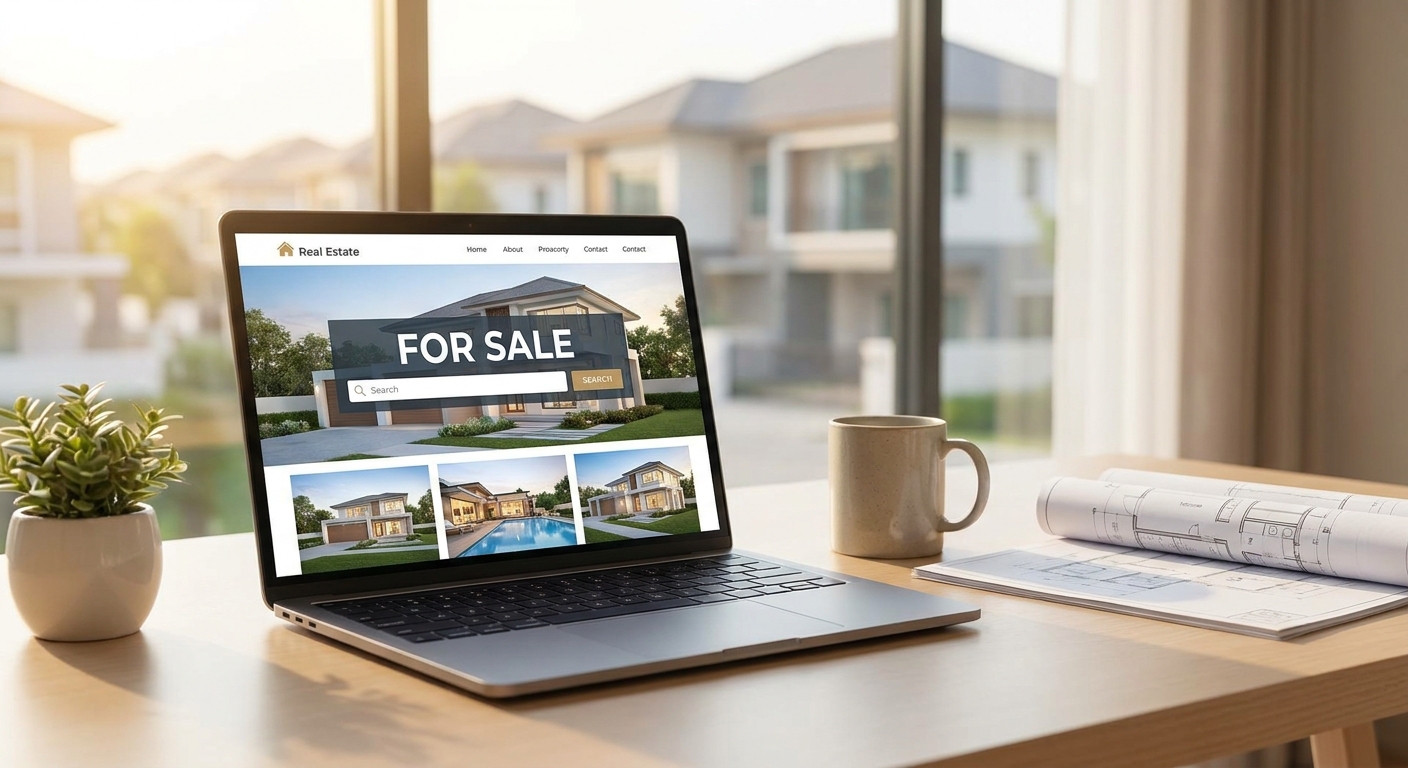
Most real estate agent websites are a photo slideshow with a contact form bolted on — and in 2026 that's not enough when a buyer can pull up three competing agents' sites on a phone before your callback lands.
- Nuvora's subscription website plan fits solo agents and small teams who want IDX, hosting, and monthly edits with no upfront build fee — Buy.
- DIY builders like Wix work as a launch-week placeholder but stall once you need real MLS syndication — Consider.
- Brokerage-issued template pages cost nothing but lock you into shared layout and branding — Skip if you're building a personal brand.
- Website design for real estate agents lives or dies on IDX integration and mobile load speed, not photo galleries.
Why This Matters
Home search starts on a screen before it starts with a handshake. Industry surveys have put online-first home searches above 90% for years, and by 2026 that number hasn't reversed — it's climbed as more MLS data feeds into consumer-facing search directly.
An agent site that can't pull live listings, load fast on a phone, or capture a lead without a phone call is invisible at the exact moment a buyer is deciding who to contact. A subscription website plan built around IDX and lead capture solves that; a static brochure site does not.
The gap between agents who get calls and agents who don't isn't talent or listings volume anymore — it's whether the website does its job in the first ten seconds.
Who This Is For
This guide is for solo agents and two-to-five-person teams who need a personal-brand website separate from (or layered on top of) whatever page their brokerage issues them. If you're a broker/owner deciding on a site for an entire office roster, the same criteria apply, but budget the review time — you're evaluating one build for multiple agent profiles instead of one.
What to Look For in Website Design for Real Estate Agents
IDX and MLS Integration
If listings don't sync automatically from your MLS, your site is stale the day it launches. IDX feeds typically refresh every 15 to 30 minutes — anything slower and you're showing buyers a house that already went under contract, which kills trust fast.
Mobile Load Speed
A three-second load delay costs mobile sites close to 40% of visitors, a benchmark Google has cited in its own mobile testing data for years. Real estate traffic skews heavily mobile — buyers browsing listings from a parking lot or an open house — so a slow theme costs you leads before a single photo loads.
Neighborhood and Local SEO Pages
Generic "About" and "Listings" pages don't rank for "homes for sale in [neighborhood]" searches. A site built for agents needs dedicated neighborhood or ZIP-level pages, because that's where most local buyer search volume actually lives.
Lead Capture and CRM Handoff
A contact form that dumps into an inbox nobody checks is worse than no form at all. The site should route leads into whatever CRM or transaction system you already run, not create a second inbox to babysit.
Update Control Without Waiting on a Developer
Listings change weekly. If every new listing photo or open house date requires an email to a freelancer and a three-day wait, the site falls behind the market. You need either self-service editing or a maintenance plan that turns updates around fast.
Cost Structure: Subscription vs Upfront Build
A custom build with a big upfront fee locks in a design that ages while you're still paying it off. A flat monthly plan spreads the cost and usually bundles hosting and maintenance, so there's no separate hosting bill or plugin-update fire drill later in 2026.
The Options for Real Estate Agent Websites
The Cheap Pick: DIY Builders (Wix, Squarespace)
Drag-and-drop builders get a page live in a weekend and cost little upfront. The catch: IDX plugins on these platforms are usually third-party add-ons, not native integrations, and they tend to slow the site down exactly where speed matters most. Consider for a temporary placeholder while a real build is in progress; skip as a permanent solution once you're generating real lead volume.
The Free Page: Brokerage-Issued Templates
Most brokerages hand every agent a page on the company site at no cost. It's functional, but you're one of dozens of identical profiles with no control over layout, no dedicated domain, and no ability to add neighborhood pages for your specific farm area. Skip if you're trying to build a personal brand that outlasts your current brokerage.
The Lead-Gen Specialist: Real Estate SaaS Platforms
Platforms built specifically for agents — Real Geeks, Placester, Chime, and similar tools — bundle IDX, lead capture, and CRM in one subscription. They're built for the vertical, which is real, but the design is templated across thousands of agents in the same markets, and customization outside their template system is limited. Consider if lead-routing automation matters more to you than a distinct visual identity.
The Custom Gamble: Freelance One-Off Builds
A freelancer can build exactly what you ask for, and pricing is usually negotiable. The risk is what happens after launch: no maintenance plan, no guaranteed turnaround on the next listing update, and a single point of failure if that freelancer stops answering emails. Consider only if you already have a relationship with someone reliable and a backup plan for updates.
The Safe Pick: Nuvora's Subscription Website Plan
Nuvora builds custom sites under a flat monthly plan that includes hosting and maintenance, with no upfront build fee. For an agent, that means IDX integration, neighborhood landing pages, and lead-capture forms get built once by a human designer, and ongoing listing or content updates go through the same plan instead of a fresh invoice every time. Buy if you want a site that stays current without becoming a second job.
What to Avoid
- Template themes sold as "real estate ready" that have no actual IDX plugin included — you'll pay extra to bolt one on later.
- "Free" brokerage pages you don't own — if you switch brokerages, the site and its search rankings usually don't come with you.
- Builder plans that hide fees behind "remove branding" or "connect custom domain" upsells — the advertised price rarely covers what an agent site actually needs.
Verdict Comparison
| Option | IDX Support | Mobile Speed | Cost Structure | Verdict |
|---|---|---|---|---|
| DIY builder (Wix/Squarespace) | Third-party plugin | Often slow with plugins | Low upfront, plugin fees add up | Consider (temporary) |
| Brokerage template | Usually included | Varies by brokerage | Free | Skip (no ownership) |
| Real estate SaaS platform | Native, built-in | Generally fast | Monthly subscription | Consider |
| Freelance one-off build | Depends on freelancer | Depends on build | One-time, variable | Consider (risk on upkeep) |
| Nuvora subscription plan | Custom-integrated | Built for speed | Flat monthly, no upfront fee | Buy |
FAQ
What's the best website design for real estate agents in 2026?
The best option depends on volume: a flat-fee subscription build with IDX integration, like Nuvora's plan, suits agents who want ongoing updates without a per-project invoice. High-volume teams focused purely on lead automation may prefer a real estate-specific SaaS platform instead.
Do real estate agents need IDX on their website?
Yes, if the goal is to show live listings without manual updates. Without IDX, listings on the site go stale within days and buyers see homes that are already under contract.
Is a brokerage-issued website enough for an individual agent?
It's enough to exist online but not enough to build a personal brand. Brokerage templates are shared across every agent in the office and usually don't transfer if you change brokerages.
How much should website design for real estate agents cost?
Costs range from near-zero for a brokerage template to a few hundred dollars a month for a custom subscription build with hosting and maintenance included. Freelance one-off builds vary the most and often carry hidden maintenance costs later.
Is Wix or Squarespace good enough for a real estate agent?
They work for a quick placeholder site but IDX integration through third-party plugins tends to slow load times, which hurts mobile-heavy real estate traffic. Consider them temporary rather than permanent.
How often should an agent website update listings?
IDX feeds typically refresh every 15 to 30 minutes, and the site should reflect that automatically. Manual listing updates that depend on a developer's schedule fall behind the market fast.
Do real estate websites need neighborhood-specific pages?
Yes, because most local buyer search volume targets specific neighborhoods or ZIP codes, not generic "homes for sale" terms. A site without dedicated local pages misses that search intent entirely.
One Last Thing
The agents who get the most callbacks in 2026 aren't the ones with the flashiest hero image — they're the ones whose site answers a buyer's question (is this house still available, what's the neighborhood like, how do I reach you) in under three clicks. Judge every option in this guide against that one test before you judge it on price.