July 26, 2026
Website Design for Veterinary Clinics: 2026 Verdict
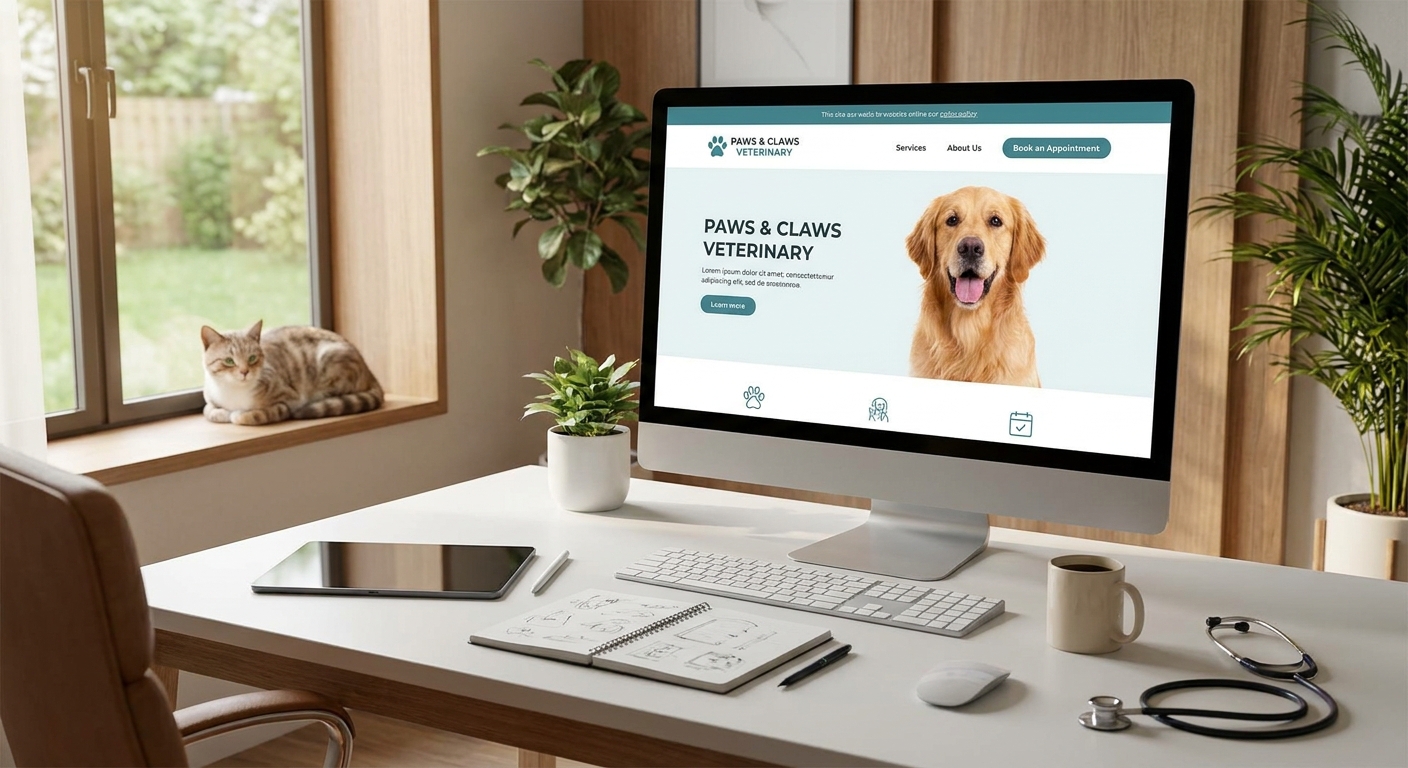
Website design for veterinary clinics has one job that comes before every other design decision: get a panicked pet owner from search result to phone number or appointment form in under ten seconds, not through a homepage carousel.
- Website design for veterinary clinics needs mobile load times under 2.5 seconds and a real appointment form, not just a phone number.
- Nuvora's flat-rate subscription build wins the Buy verdict for clinics that need ongoing edits without hiring a marketing person.
- Freelance one-off builds are a Skip once a clinic needs more than one content update a year.
- DIY builders like Wix or Squarespace are a Consider only for a single-location practice with no growth plans in 2026.
Why this matters
A veterinary clinic's website gets found mid-crisis more often than a boutique retailer's ever will — a limping dog at 9pm, a cat that stopped eating, a first-time puppy owner searching for a same-week wellness visit. Nearly all of those searches happen on a phone, and most of them bounce if the site takes more than a couple of seconds to surface a phone number. Nuvora builds subscription websites for exactly this kind of pressure: local, appointment-driven, trust-heavy small businesses that can't afford a slow build cycle or a site that goes dark when a freelancer disappears. In 2026, the clinics winning local search aren't the ones with the fanciest homepage animation — they're the ones with the fastest path from search result to appointment request.
Who this is for
This guide is for practice owners and office managers running anything from a single-doctor general practice to a multi-location group with an in-house surgical suite. It's for clinics juggling wellness exams, boarding, grooming add-ons, and prescription refill requests through one front desk, and for anyone tired of a receptionist answering the same three questions by phone that a website should answer in one click. If your clinic takes walk-ins, handles after-hours emergencies, or books vaccine reminders year-round, the criteria below apply directly to you.
What to look for in website design for veterinary clinics
Mobile load speed under 2.5 seconds
Google's Core Web Vitals standard sets 2.5 seconds as the largest contentful paint threshold for a "good" page in 2026, and veterinary searches skew mobile harder than almost any other local service category — someone Googling "24 hour vet near me" is standing in a parking lot, not sitting at a desktop. A bloated template running five plugins and three tracking scripts misses that mark constantly. Speed here is the difference between a booked appointment and a call to the clinic three miles down the road.
Online appointment request forms, not just a phone number
A phone-only contact page forces every new client through a hold queue during business hours, which is exactly when the front desk is busiest with in-person clients. A short appointment request form — pet type, reason for visit, preferred day — lets staff batch-process requests instead of dropping them. Clinics that skip this still get calls; they just lose the after-hours and lunch-break traffic that never leaves a voicemail.
Local SEO and Google Business Profile alignment
Veterinary searches are hyperlocal: "emergency vet [city]" and "vet that takes walk-ins near me" dominate the intent. A site with city-specific service pages, a matching Google Business Profile, and consistent name-address-phone data across both is what keeps a clinic in the local 3-pack instead of buried on page two behind a directory listing.
Service-specific pages instead of one long homepage
Wellness exams, dental cleanings, boarding, and surgery are different searches with different intent — someone Googling "dog teeth cleaning cost" isn't looking for the same page as someone Googling "emergency vet." The same page-per-service logic applies to any appointment-driven local practice; it plays out the same way on a dentist website built on a subscription model. Cramming everything onto one homepage kills that search-term specificity.
Real trust signals, not stock photography
A stock photo of a golden retriever tells a pet owner nothing about the doctors actually treating their animal. Real staff photos, license numbers, years in practice, and specific service details — in-house lab, digital X-ray, surgical suite — do more to convert a nervous first-time client than any hero banner.
A maintenance plan that keeps content current
Vaccine protocols change, staff turn over, hours shift around holidays — a site that was "done" in 2023 and never touched since is quietly wrong on multiple pages by 2026. Ongoing maintenance, not a one-time build, is what keeps hours, staff bios, and service pricing accurate.
Top picks: the four ways to build a vet clinic site
The DIY builder (Wix, Squarespace, GoDaddy) — the cheap start. Templates here run $16 to $49 a month, and a clinic can have a homepage live in an afternoon. Appointment forms, schema markup, and multi-location pages usually need a paid app layered on top, and a receptionist with no design background ends up as the de facto webmaster. Verdict: Consider for a single new-graduate vet opening a solo practice with no growth plans.
The freelancer one-off build — the gamble. A freelance build typically runs $3,000 to $8,000 depending on scope, and quality swings wildly by contractor. The bigger risk shows up six months later, when the freelancer moves on, the login credentials get lost, and nobody's fixing a broken appointment form. Verdict: Skip for any clinic that expects its site to need updates more than once a year.
The traditional agency project — the expensive proper build. A full custom build from a traditional agency often starts north of $10,000 upfront, with every future change — a new staff bio, a holiday hours update — billed hourly or invoiced separately. Build quality is usually solid; the cost of small edits is where clinics get squeezed. Verdict: Consider for a large multi-doctor group with a marketing budget and staff to manage the relationship.
The flat-rate subscription build — the safe pick. No upfront build fee, one flat monthly rate covering hosting, maintenance, and small content edits, with a human designer doing QA on every page instead of a template generator. For a clinic that needs its hours, staff, and service pages kept current without hiring a marketing person, this removes both failure points above: the freelancer disappearing and the agency invoice for a one-line edit. Verdict: Buy for clinics that want a site that stays accurate without a separate maintenance contract.
Get a vet clinic site built right
Flat monthly plan, no upfront build fee, human QA on every page.
What to avoid
- Stock photography of pets that don't match the clinic's actual patients or doctors — erodes trust fast with a skeptical pet owner.
- Chatbots that can't distinguish "my dog ate a sock" from "I want to reschedule a nail trim" — a bad triage experience during an actual emergency.
- One giant homepage with every service crammed into a single scroll and no dedicated URL per service — kills local search rankings for anything but the clinic's own name.
Verdict comparison table
| Approach | Monthly cost model | Ongoing maintenance | Mobile speed track record | Verdict |
|---|---|---|---|---|
| DIY builder | $16-$49/mo | Self-managed | Inconsistent, plugin-dependent | Consider |
| Freelancer build | $3,000-$8,000 one-time | None included | Depends on original build | Skip |
| Traditional agency | $10,000+ upfront, billed hourly after | Billed separately | Usually strong | Consider |
| Flat-rate subscription | One flat monthly rate | Included | Built for the 2.5s threshold | Buy |
FAQ
What's the best website design for veterinary clinics in 2026?
A mobile-first site with an online appointment request form, service-specific pages, and load times under 2.5 seconds performs best in 2026. Generic templates without those three elements lose after-hours and mobile searches to competitors.
Is a subscription website better than a one-time build for a vet clinic?
For most clinics, yes, because vaccine protocols, staff, and hours change often enough that a site needs regular edits. A one-time build from a freelancer or traditional agency leaves those updates unmanaged or billed hourly.
How much does a veterinary clinic website cost in 2026?
DIY builders run $16 to $49 a month, freelance builds run $3,000 to $8,000 one-time, and traditional agency projects often start above $10,000 upfront. Flat-rate subscription models roll hosting and maintenance into one monthly rate instead of a large upfront bill.
Do vet clinics need online appointment booking?
An online appointment request form is close to essential in 2026 because it captures after-hours and lunch-break traffic that never turns into a phone call. It also reduces hold-time pressure on the front desk during business hours.
How important is mobile speed for a veterinary website?
Very important — Google's Core Web Vitals standard sets 2.5 seconds as the threshold for a good mobile page, and most veterinary searches happen on a phone during an urgent moment. A slow site loses that search to the next clinic in the results.
Should a multi-location vet group use one website or separate sites per location?
One website with dedicated, city-specific pages per location usually outperforms separate sites, because it consolidates authority while still matching local search intent. Separate service pages per location keep the Google Business Profile data aligned.
What pages does a veterinary clinic website need?
At minimum: a homepage, an appointment request form, individual service pages for wellness, dental, boarding and surgery, a staff/doctor page, and an emergency contact page. Cramming all of that onto one homepage hurts search rankings for every service term.
Is a DIY builder like Wix good enough for a vet clinic?
A DIY builder is acceptable for a single-location practice with no growth plans, running $16 to $49 a month. It becomes a liability once a clinic needs appointment forms, schema markup, or multi-location pages that most templates don't handle natively.
One last thing
The fastest fix on most vet clinic sites redone in 2026 isn't a redesign — it's cutting the homepage down to one hero section and moving every service description onto its own URL. That single change typically clears the 2.5-second load threshold without touching a line of code anywhere else on the site.